
Flowers blooming on Grounds in the spring
Collection

An Introduction to Contemplative Pedagogy

This collection is for instructors from all fields—often inspired by their own contemplative practice—who are looking for ways to engage students more wholistically and develop their capacity for awareness, concentration, and insight.

Updated January 2025
Dorothe Bach headshot
Associate Director & Professor
Office of the Executive Vice President and Provost
View Bio
01

A Brief History of Contemplative Education

Journal of Transformative Education

This article explores the history of the current reemergence of a contemplative orientation in education.

Headshot of Dorothe Bach
Dorothe Bach

Why contemplative pedagogy now? I recommend this brief history of contemplative education to help you locate your personal interest within the larger context. It also provides a concise introduction to the early pioneers in the contemporary contemplative pedagogy world. For a deeper dive, I recommend Oren Ergas’ 2018 article “A contemplative turn in education: Charting a curricular pedagogical countermovement."

View excerpt

This contemporary and ancient history traces the continuing presence of the contemplative in education to counter suggestions that contemplative education may be a fleeting trend. Rather, it indicates that contemplative practice, which grounds this approach in education, is an essential aspect of who we are and how we learn.

Was this resource helpful?
02

Introduction to Contemplative Pedagogy

Karolyn Kinane

What is contemplative pedagogy? In this short video, leading expert Karolyn Kinane offers a brief primer on the aims and methods of contemplative pedagogy.

Headshot of Dorothe Bach
Dorothe Bach

Start here to get a concise introduction to contemplative pedagogy in higher ed. I have benefited from Karolyn Kinane’s work as an educational developer, contemplative teacher, and practitioner. In this 18-minute video, Karolyn focuses on three levers of contemplative pedagogy: disposition, process and connection. I also recommend checking out Karolyn’s blog.

View excerpt

I see contemplation as an invitation to pause and check in as instructors with the work we’re doing in terms of values alignment in course design and facilitation, in terms of what we’re asking students to do and be, and in terms of the opportunities we’re allowing students to practice contemplative processes, that is, being intentional, self aware, expressing care, and reflecting in order to make meaning from their experiences.

Was this resource helpful?
03

Consider Contemplative Pedagogy to Support Student and Faculty Well-being

University of Pittsburgh Teaching Center

This is a quick overview of the benefits of incorporating contemplative pedagogy into the classroom, with a list of select practices to get you started.

Headshot of Dorothe Bach
Dorothe Bach

I like the compactness and practicality of this introduction to contemplative pedagogy and that it reminds us not only of the need to attend to the wellbeing of students but also of faculty. Some of the resources are a bit dated but they remain staples of the movement, which peaked roughly a decade ago.

View excerpt

One area in which caring for our well-being and supporting a dynamic learning environment converge is in the use of contemplative practices in our teaching. Contemplative practices offer a space in which instructors and students can be fully present in the learning experience, it values not only the content that is covered but also the human beings that are part of the process.

Was this resource helpful?
04

Practically Impractical: Contemplative Practices in Science

Journal of Contemplative Inquiry

This article describes four contemplative practices suited for use in the scientific classroom and research lab: a simple, discreet stilling exercise for focus and attention, a "beholding" approach to exploring visual data, and two writing exercises designed for laboratory researchers.

Headshot of Dorothe Bach
Dorothe Bach

I frequently recommend this article to colleagues who ask how contemplative pedagogy can enhance learning in the sciences and engineering. In addition, it is a moving testimony to how educators can ground their teaching practices within the value system of a particular contemplative tradition and practice (in this case a Christian monastic tradition).

View excerpt

Contemplation has been described as a “long, loving look at the real,” a characterization that could equally well apply to science. In this paper, I frame a contemplative approach to the teaching and practice of science which draws strongly on the Christian monastic traditions. Students, in particular, struggle with the ever increasing information density in their course work which can cloud their understanding of the relationship of their work to broader contexts. I suggest that the monastic counsels of intentional simplicity, deep listening and constancy can provide a foundation for the design of science courses which help students engage more deeply with their work in the midst of a deluge of information, particularly visual and graphical information. I present four different contemplative practices suited for use in the scientific classroom and research lab: a simple, discreet stilling exercise for focus and attention, a ‘beholding’ approach to exploring visual data and two writing exercises designed for laboratory researchers.

Was this resource helpful?
05

Contemplative Reading: Generosity, Meaning-making, and Intolerance

Journal of Contemplative Inquiry

In this piece, the author describes how they revised a traditional assignment of weekly reading responses into a contemplative reading assignment. It reframes reading as a practice of generosity and connection that can generate self-awareness and transformative engagement with an Other and support critical thinking.

Headshot of Dorothe Bach
Dorothe Bach

Reading responses are a staple in humanities and social sciences classrooms. This article offers inspiration for deepening learning by adding a contemplative twist to this ubiquitous assignment format.

View excerpt

Students may read a text in much the same way they read a situation or another person. Critical reading can be a deeply self-aware and transformative process. However, at the undergraduate level, it can often be a mere analytical performance that reinforces the notion of radical discontinuity between historical eras and among human experiences. Contemplative reading, as a practice of generosity and connection, can generate self-awareness and transformative engagement with an Other, supporting critical reading. Contemplative readings of vilified or ignored subjects paired with students’ direct experiences of their resistance can surface intolerance and encourage meaning-making. In this piece, a traditional assignment of weekly reading responses posted by students to a Learning Management System is revised into a Contemplative Reading assignment. This assignment makes visible the reading process to highlight the skills of generous reading, noticing novelty, recognizing emotional reactivity, owning emotions rather than projecting them, and meaning-making, thereby expanding students’ capacities to engage with the world using critical, creative, and contemplative dispositions.

Was this resource helpful?
06

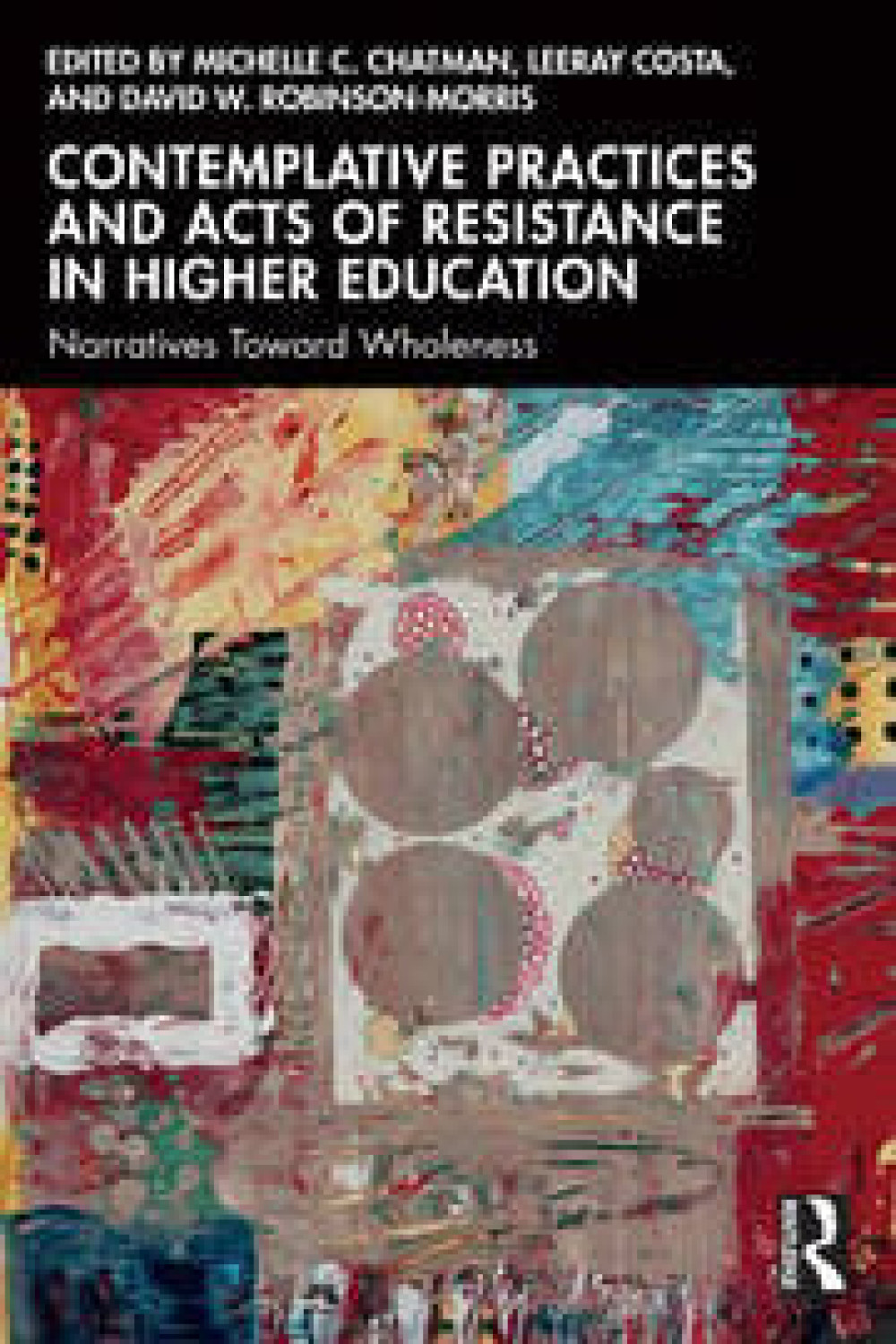
Contemplative Practices and Acts of Resistance in Higher Education

Michelle C. Chatman, LeeRay Costa, and David W. Robinson-Morris (Eds.)

What does it mean to be a contemplative practitioner attentive to issues of power, racism, and marginalization in higher education today? The contributors to this book share their answers to this critical question.

Headshot of Dorothe Bach
Dorothe Bach

The contemplative pedagogy movement in the US and Europe that began in the 2000 grew out of a growing dissatisfaction with an education system that too often treats students (and teachers) as brains without bodies, hearts and spirit. This volume reclaims the radical roots of the movement at a time when mindfulness and contemplation are being commodified and defanged (think "McMindfulness") and coopted by the productivity worship of the neoliberal University. This collection further updates the language -- and to a certain extent also the goals -- of the contemplative movement by centering social and environmental justice.

View excerpt

The contributors to this volume – educators, student affairs practitioners, and higher education staff – heartfully share a broad range of contemplative practices and acts of resistance used within the confines of shattered systems and institutions for themselves, their colleagues, and their students. The narratives in this volume broadly imagine, inspire, recount, and guide readers toward the fullness of their humanity and wholeness within institutions of higher education. At the same time, these accounts navigate the operational realities of daunting demands on the mind, body, and spirit, the growing turbulence of working on higher education campuses across the country, and a sense of urgency toward collective life affirmation within modern higher education institutions. Each chapter features critical framing of a concept, personal stories of this concept in action, and descriptions of contemplative practices for readers to use in their own contexts. Together, chapter authors demonstrate what it means to be a contemplative practitioner attentive to issues of power, racism, and marginalization in higher education today. With a deep breath and mindful awareness, this book invites faculty and staff at colleges and universities on a transformational journey with the contributors toward fullness in pursuit of becoming whole and inspiring change.

Was this resource helpful?
07

A Classic: Contemplative Practices in Higher Education:

Daniel Barbezat and Mirabai Bush

This classic text introduces practical ideas for applying contemplative practices across the academic disciplines. Examples of contemplative techniques include mindfulness, meditation, yoga, deep listening, contemplative reading and writing, and pilgrimage, including site visits and field trips.

Headshot of Dorothe Bach
Dorothe Bach

While much has changed in the field since it's publication in 2013, this book is still a worthwhile read. Pioneering contemplatives Daniel Barbezat and Mirabai Bush were a great inspiration for me when I first began exploring contemplative pedagogy. If you are relatively new to this pedagogy, you will appreciate this straightforward introduction complete with guidance on planning contemplative activities.

View excerpt

Contemplative practices are used in just about every discipline--from physics to economics to history--and are found in every type of institution. Each year more and more faculty, education reformers, and leaders of teaching and learning centers seek out best practices in contemplative teaching, and now can find them here, brought to you by two of the foremost leaders and innovators on the subject. This book presents background information and ideas for the practical application of contemplative practices across the academic curriculum from the physical sciences to the humanities and arts. Examples of contemplative techniques included in the book are mindfulness, meditation, yoga, deep listening, contemplative reading and writing, and pilgrimage, including site visits and field trips.

Was this resource helpful?

Want to recommend a resource to add to this collection? Send us an email.