
Woman standing in front of a class
Collection

Getting Started as a Graduate Student Teacher

First time teaching your own course? In this collection, you'll find foundational resources to begin your teaching journey. Each resource is from my own bookshelf that I use over and over again!

Updated July 2025
Cynthia Korpan headshot
Adjunct Professor (former Director of Teaching Excellence)
University of Victoria
View Bio
01

How Learning Works: Eight Research-Based Principles for Smart Teaching

Marsha C. Lovett, Michael W. Bridges, Michele DiPietro, Susan A. Ambrose, & Marie K. Norman

This excellent book breaks down learning into eight principles. Each principle is clearly defined, illustrated, and linked to research, and strategies are provided as to how to put the principle into practice.

Headshot of Cynthia Korpan
Cynthia Korpan

This is a highly valuable book that you will use continuously in your teaching or as your prepare to teach, whether as a teaching assistant, guest lecturer, or instructor, whether in post-secondary institutions or other spaces. It is clearly written with ample examples of how to implement the principles. In particular, each chapter begins with a short story that perfectly introduces the discussion of the learning principle.

View excerpt

How Learning Works: Eight Research-Based Principles for Smart Teaching
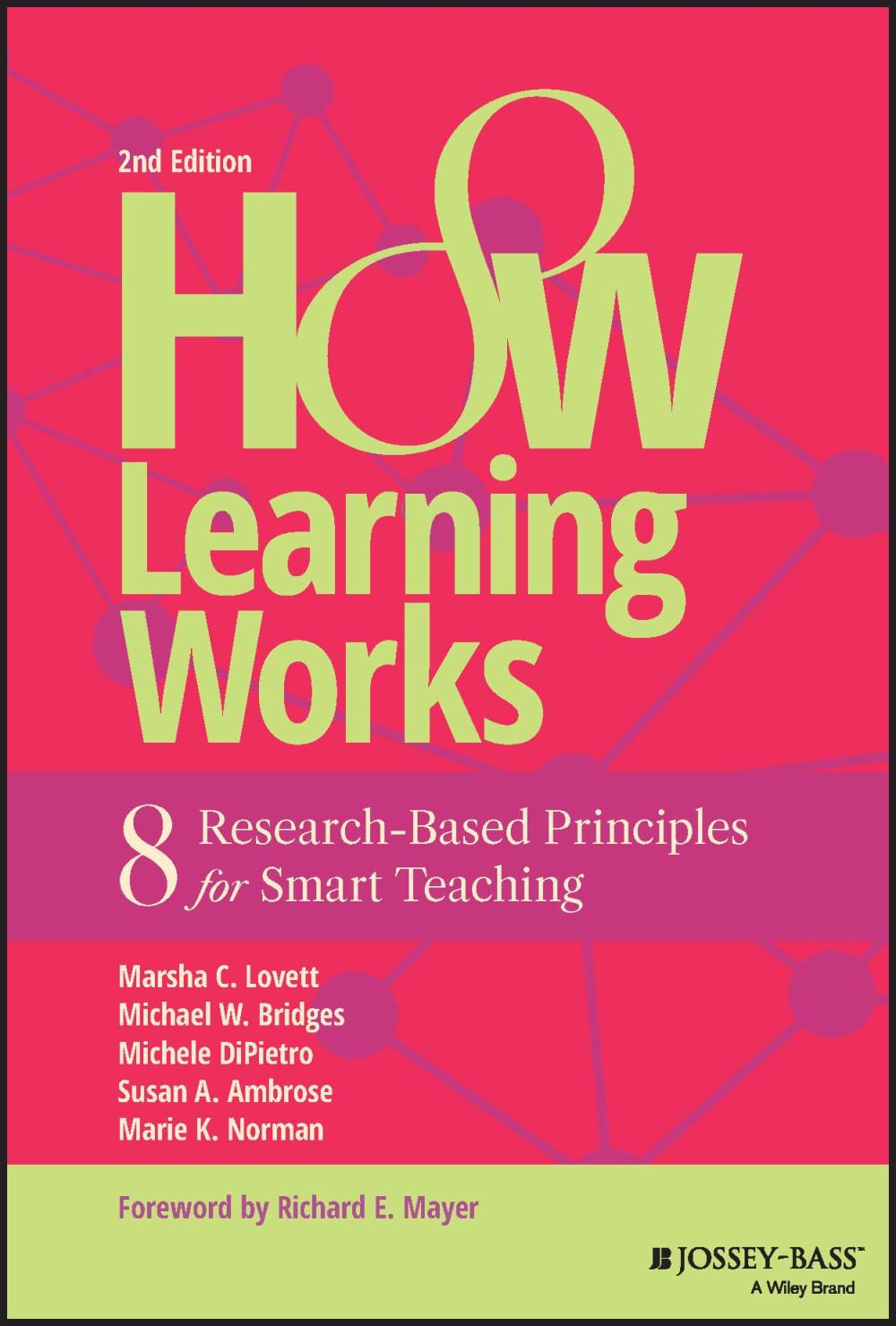
Marsha C. Lovett, Michael W. Bridges, Michele DiPietro, Susan A. Ambrose, & Marie K. Norman
Open resource

Here is an example of one of the stories:

Too Many Reasons

I used to think I was pretty good at getting students to participate in class, but lately I’ve been facing a “wall of silence.” Knowing a few colleagues who do mid- semester feedback in their courses, I decided to give it a try and specifically asked my students why they don’t participate more during class. Boy, did they give me an earful! One student wrote that, on top of a full course load, they are working late hours at two jobs. By the time they get to my class, they are too exhausted to think. One reported that she (I’m assuming it’s a she) tried participating early in the semester but stopped when she didn’t feel like her contributions were appreciated— like the time two male students made essentially her same points and were praised for the stolen ideas. Another disclosed that they are on the autism spectrum and have a hard time navigating social interactions, like when to jump into a discussion without being rude or weird, or how to disagree without sounding angry or condescending. . . . To avoid the uncertainty, they simply don’t participate. Yet another mentioned feeling hurt when they were misgendered in class and, after that, they disengaged. And yet another wrote that professors, especially Southern ladies like me, don’t really want to hear from their Black students. That stung. I try not to make assumptions about my students, but they seem to have no problem making assumptions about me. On and on it went. There were as many reasons for not participating as there were students. I tried to find some common theme that would point to one clear solution, but no. I want to help my Why Do Students’ Identities and Stages of Development Matter for Learning? students, I truly do. But each one seems to want something different from me, and I can’t personalize my course for each individual student. Plus, now I’m even afraid I’ll say the wrong thing and make it worse. What should I do? Professor Charlotte Calhoun
Was this resource helpful?
02

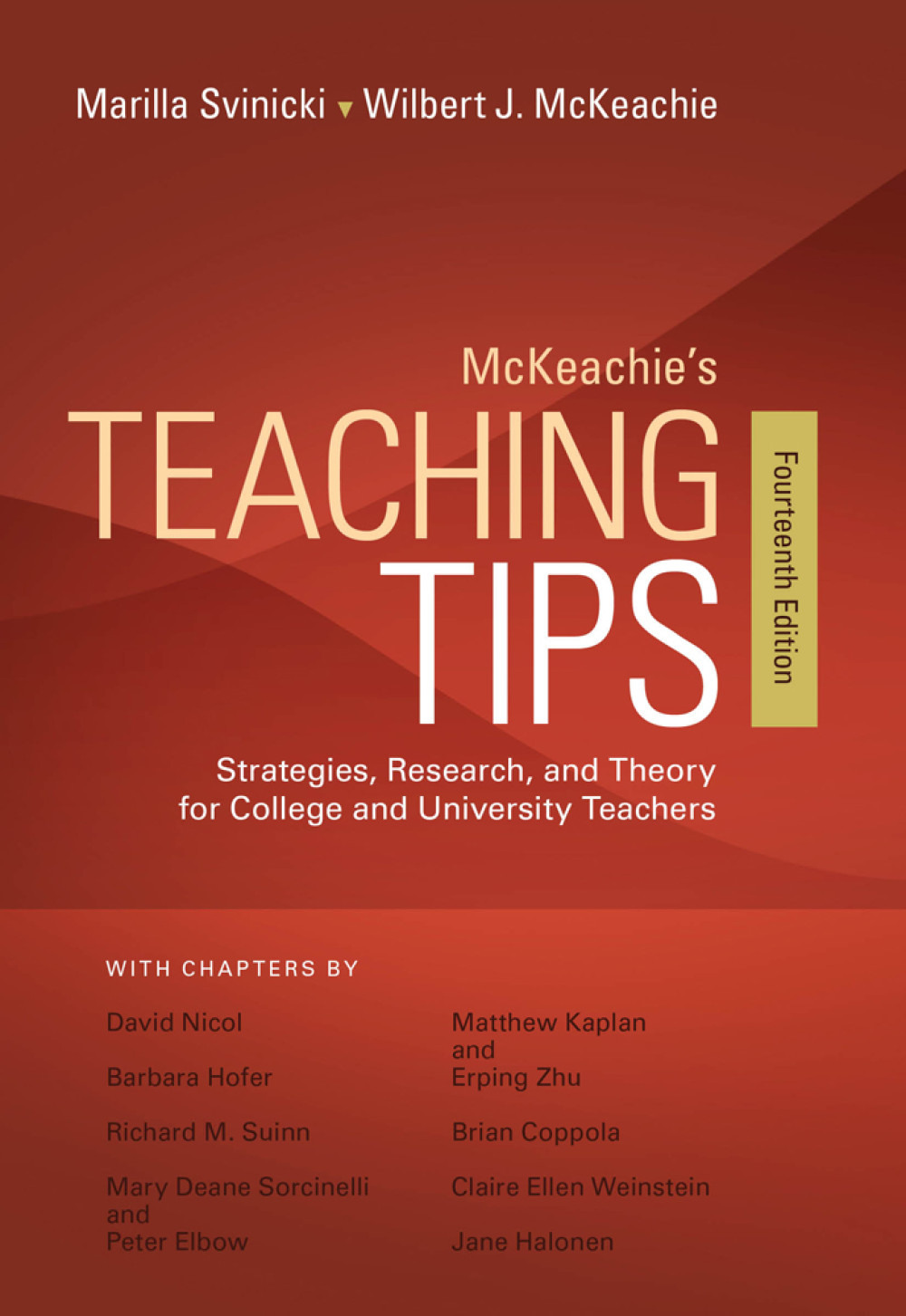
McKeachie's Teaching Tips: Strategies, Research, and Theory for College and University Teachers

Wilbert J. McKeachie & Marilla Svinicki

This practical handbook provides concrete, research-based strategies for all kinds of teaching situations.

Headshot of Cynthia Korpan
Cynthia Korpan

Despite this resource being over 10 years old now, it is still a comprehensive resource full of information related to teaching, as evident by it being in its 14th edition. Almost every topic you can imagine is included in this resource, except the more recent topic of artificial intelligence. It is a book that you will refer to often.

View excerpt

This indispensable handbook provides helpful strategies for dealing with both the everyday challenges of university teaching and those that arise in efforts to maximize learning for every student. The suggested strategies are supported by research and adaptable to specific classroom situations. Rather than suggest a “set of recipes” to be followed mechanically, the book gives instructors the tools they need to deal with the ever-changing dynamics of teaching and learning.

Was this resource helpful?
03

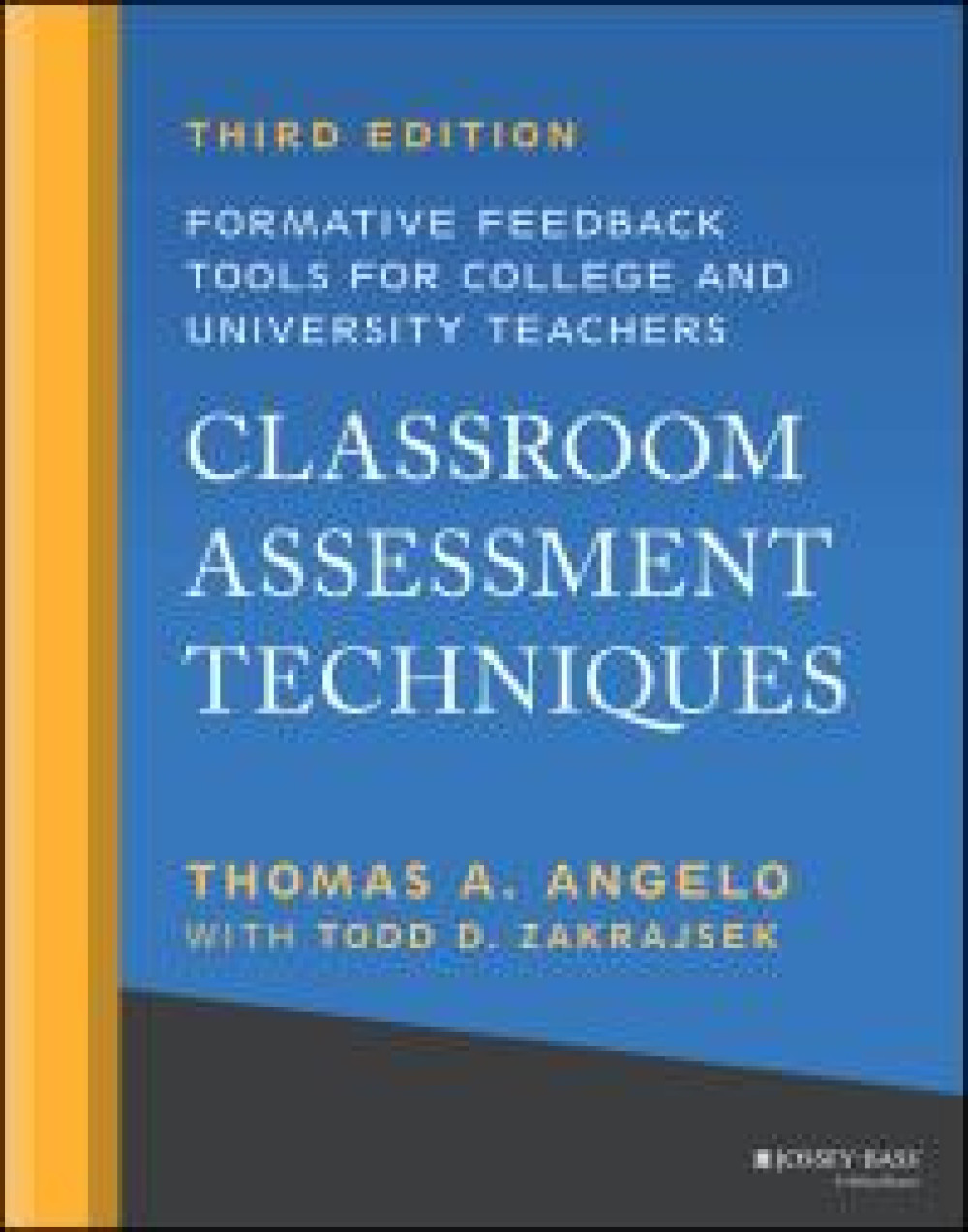
Classroom Assessment Techniques: Formative Feedback Tools for College and University Teachers

Thomas A. Angelo & Todd D. Zakrajsek

This handbook provides practical strategies you can use at the end of each class sessions, whether on-site or online, to find out if your students are learning what you're hoping they learn.

Headshot of Cynthia Korpan
Cynthia Korpan

This book will become a staple on your teaching bookshelf. It offers multiple ways to conduct post-assessments to ensure students have met your learning outcomes. Each classroom assessment technique (CAT) is described, its purpose, suggestions on how to use, several examples, and ideas on how to adapt. Further, the authors created categories of CATs, such as assessing prior knowledge to assessing critical thinking.

View excerpt

Classroom Assessment is a simple, practical approach to getting and giving feedback to improve the effectiveness and quality of teaching and learning. It is an evidence- based approach to improving learning and teaching that involves college and university teachers and students working intentionally and collaboratively toward shared goals. When Classroom Assessment is effectively employed, teachers obtain useful information— in terms of direct evidence or learners’ perceptions— about what, how much, and how well their students are learning. Analyzing and reflecting on that information provides useful insights for making teaching, assessment, and feedback more engaging, effective, and efficient. By involving students in the cycle of providing, analyzing, and using feedback, teachers help them become more capable, independent, and successful lifelong learners.

Was this resource helpful?
04

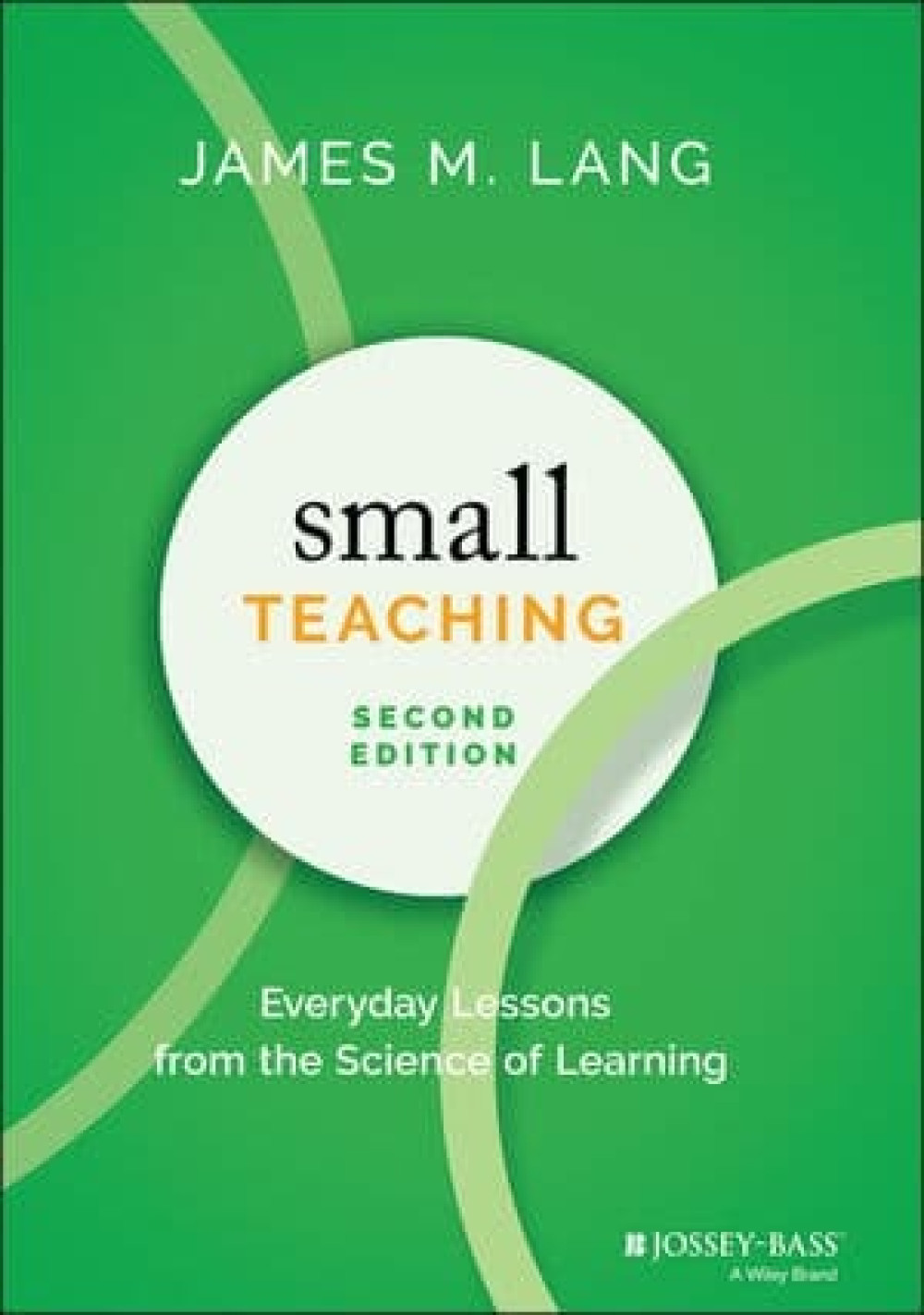
Small Teaching: Everyday Lessons from the Science of Teaching

James M. Lang

In this book, James Lang argues that small moves we make in our teaching can have outsize impact on student learning. It features practical examples of teaching strategies all tied to research from the learning sciences.

Headshot of Cynthia Korpan
Cynthia Korpan

James Lang has provided a book that you will want to take on vacation! I highly recommend this book because of how easily digestible and immediately useful it is. I encourage you to try every recommendation that James puts forward because every idea in the book is backed by a plethora of evidence. As an educational developer, this is one of the books I recommend to all instructors, no matter where they are in their academic career.

View excerpt

In higher education we tend to go into class with our content guns blazing: I HAVE SOME STUFF TO TEACH YOU, LET’S GET STARTED! But the research on human learning that we will consider in this chapter suggests that the first step in the learning process should be to follow Anne’s lead— not necessarily through her specific activity of asking pre- reading questions–but by asking students to engage in predictive activities of some kind or another before we expose them to new course content. Such activities could include inviting students to answer questions about what they are about to learn or experience, but could also include asking students to solve problems that are beyond their current ability level or to try their hand at a new skill before they have been given any formal instruction. This approach can seem counterintuitive since it turns the normal teaching sequence on its head. The operating assumption of many teachers runs like this: First I teach them the material, then I have them answer questions or solve problems with it. Read the story about polar bears, and then ask them where polar bears live. Give students a lecture on poetry, and then have them interpret a poem. Show students how to solve a particular type of math problem, and then give them one to solve on their own. But learning research suggests something quite different. It tells us that asking students to use their existing knowledge and skills to struggle with the material before we teach it can provide a robust foundation for deeper learning.

Was this resource helpful?
05

Learning to Teach in Higher Education: Graduate Student Teachers Becoming, Being, and Forthcoming

Cynthia Korpan

How do graduate students who have never taught previously learn how to teach in the academic workplace? This resource shares research that looked at this question.

Headshot of Cynthia Korpan
Cynthia Korpan

This resource is a result of my doctoral dissertation research. It summarizes the findings of a qualitative study looking at how graduate students, new to teaching in higher education, approach learning how to teach. The findings provide insights for graduate students to consider as they embark on teaching in post-secondary.

View excerpt

As graduate students take on a teaching role (whether as a teaching assistant (TA) or as the instructor of record) and begin the process of becoming a teacher in higher education, they bring their experience of being a student. Due to this experience, graduate students hold robust beliefs and dispositions related to teaching and learning. However, their beliefs and dispositions are narrowly focused and based on what worked for them as a student. Further, since graduate students are teaching for the first time and have never been in a ‘teaching’ role, they default to approaching their work from a student subject position.

Was this resource helpful?

Want to recommend a resource to add to this collection? Send us an email.