Image of a telescope looking out at a sunset, Unsplash photo by Daniel Christie
Collection

Exploring and Defining an Educator's Scope of Practice

It can be challenging to manage all the responsibilities associated with teaching, advising students, and engaging in research and service to your department, college, or discipline. Reflecting on your scope of practice can help you clarify your roles and boundaries to help you thrive.

Updated May 2025
Penny Edwards headshot
Faculty Development Specialist
University of Rhode Island's Office for the Advancement of Teaching & Learning
View Bio
01

How Role Clarity and Boundaries Can Help Us Thrive, with Karen Costa

Teaching in Higher Ed

On episode 505 of the Teaching in Higher Ed podcast, Karen Costa shares a framework to help faculty navigate their roles in higher education.

Headshot of Penny Edwards
Penny Edwards

In this podcast, I appreciate how Karen initially frames the conversation around trauma-aware pedagogy, secondary trauma, and the (sometimes too high) demands placed on faculty and students, to lead into a discussion on the importance of boundaries and having role clarity as educators. By exploring an educator's scope of practice, Karen ultimately argues that to best support our students, we need to first support ourselves.

View excerpt

Karen starts off by describing trauma-aware pedagogy, secondary trauma, and the demands placed on faculty and students, especially coming through COVID and other wide-ranging workplace issues. This framing leads into a discussion on the importance of boundaries and having role clarity as educators. She introduces and explores an educator's scope of practice by walking the audience through an exercise in thinking through 'what is mine?' and 'what is not mine'?

Here's an excerpt from Karen on the podcast:

"So I was hearing from faculty telling me these stories of students coming to them, sharing their traumas in the classroom. Because for you know, once, once we started coming back and it was just...too much, and in many ways still is. So I wrote the scope of practice and developed that work probably early 2021 as we started returning to campus as a tool for faculty, you know, as a sort of a language for them to have...And we'll talk more about what this looks like to say this is mine and this is not mine and to do it in a really simple way not only to help them take care of themselves but also to take care of students. So it's again this is absolutely based on mutualism benefiting faculty and students as this crisis continues and as we see we now live in sort of this era of crisis."

Karen continues on the podcast with a nod to administrators and extending the scope of practice framework:

"So I would really love lots of forward thinking administrators to really take a hard look at course loads and class sizes and ask if they are right sized for this era of crisis and for the mental health challenges that both faculty and students and staff are experiencing."
Was this resource helpful?
02

An Educator's Scope of Practice: How Do I Know What's Mine?

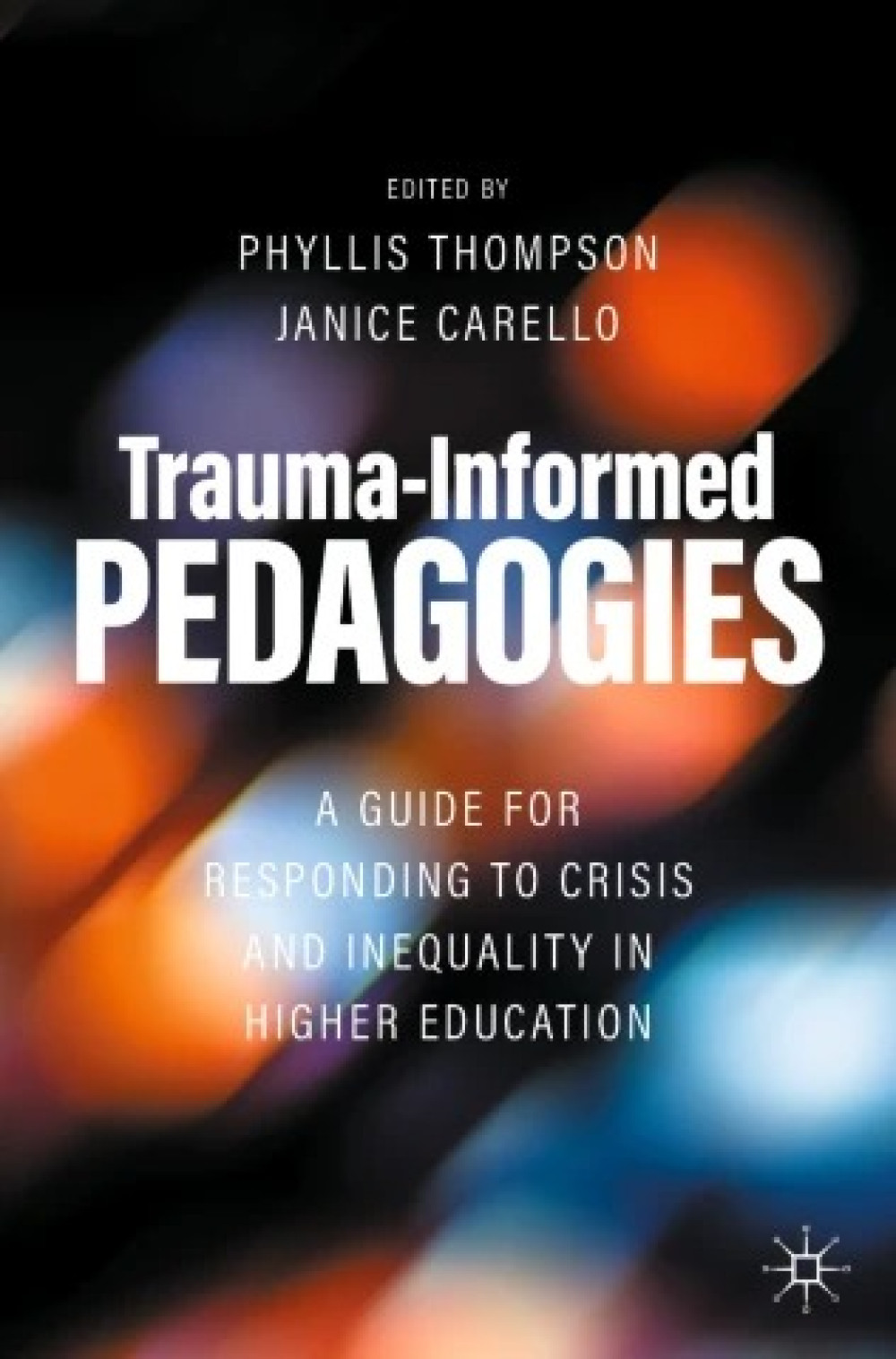
Trauma-Informed Pedagogies

Trauma and stress are in the classroom, but scant guidance exists to help faculty understand and navigate the impact of trauma on teaching and learning. From healthcare, the scope of practice model is a tool educators can apply to help protect well-being through healthy boundaries and role clarity.

Headshot of Penny Edwards
Penny Edwards

I love how Karen Costa begins this book chapter by sharing some of her personal journey in almost leaving higher ed and how she came across the scope of practice model. The account of her experiences and thinking lend humanity to what we all experience in higher ed and support the use of this model to (re)consider our roles, responsibilities, and boundaries.

View excerpt

Karen's chapter sets the stage for why this framework matters and then explores how to use the framework. Here's an excerpt capturing that initial framing:

"The [scope of practice] SoP model has the potential to improve the college learning experience for both educators and students by forcing us to consider the importance of qualifications and role clarity in our work. As we face growing levels of stress, trauma, and mental illness in our classrooms, both in our students and ourselves, reducing uncertainty and clarifying roles can help us to better manage the challenges we face. The boundaries inherent in this model will offer higher educators and our students an effective, flexible, and supportive structure in which to teach and to learn.”

Was this resource helpful?
03

Toward a Scope of Practice for (Un)Graders

Unmaking the Grade

What are we qualified for? What are we responsible for? And why do we assess student work anyway? Emily Pitts Donohoe explores these questions via Costa's scope of practice framework in this Substack post.

Headshot of Penny Edwards
Penny Edwards

Emily Pitts Donohoe applies Karen Costa's educator scope of practice framework to the work Donohoe does with ungrading approaches. It's a great application and a solid way to (re)think about where our roles and boundaries could influence the way we consider grading student learning.

View excerpt

On how Emily found this exercise useful...

"I found this activity helpful for a few reasons. The first is that the process of grading and giving feedback can be really overwhelming. I talk to graduate students all the time about how to assess student work without letting it take over your life. Accomplishing this requires getting to the root of what we’re responsible for and not responsible for as instructors. Establishing a scope of practice can help us do that."

and...

"Relatedly, I found this activity useful because it helped me separate my scope of practice as an educator and assessor from the functions I’m expected to serve as a grader, or at least the functions that the grades I assign are expected to serve. Here’s what I mean. When I assess student work, my first commitment is to my students, and I consider it my job to provide assessments of their work primarily for their benefit. But the assessments I provide, particularly in the form of letter grades, are also expected to make the work of admissions committees and employers easier by neatly ranking students and sorting them into buckets."

Was this resource helpful?
04

Karen Costa's 🤎 Scope of Practice Template

Karen Costa

This is Karen Costa's original Scope of Practice Template for Educators laid out in five steps.

Headshot of Penny Edwards
Penny Edwards

Now it's your turn! Make copy and engage from there. I encourage educators to take some time working through Karen Costa's scope of practice template to clarify your roles and boundaries. Working through this template could offer clearer focus on your path to thriving in academia. Be sure to acknowledge Karen's efforts in any reproduction.

View excerpt

Step 1: What Are Your Qualifications?

Imagine that you find out that you have arthritis in your right hip. A doctor you trust tells you that if you want to be free of hip pain, you’ll need hip replacement surgery. Who would you want to perform that surgery: an orthopedic surgeon or a yoga teacher trained in teaching students with arthritis?

Imagine that after a successful hip replacement surgery and physical rehabilitation, a trusted doctor tells you that developing a consistent yoga practice will help you take care of your new hip. Who would you rather take yoga classes with: a yoga teacher trained in teaching students with arthritis or an orthopedic surgeon?

Was this resource helpful?

Want to recommend a resource to add to this collection? Send us an email.