
Course-Based Undergraduate Research Experiences (CUREs) in the Sciences
This 2022 meta-analysis of 20 years of CUREs literature includes a summary of common structures, practices, and measurement tools with an authoritative bibliography for those who want to explore more deeply.

This is the authoritative overview of CUREs scholarly literature. The article categorizes different resources and outlines the general elements of CUREs with differing levels and types of implementation. It also offers a fantastic bibliography for those wanting to dig deeper into individual topics, as well as thoughts about the future of CUREs. If this is a bit "journal-y" for you, I can also recommend Erin L Dolan's 2016 summary of CUREs, commissioned by an NSF committee.
View excerpt
Current Status and Implementation of Science Practices in Course-Based Undergraduate Research Experiences (CUREs): A Systematic Literature Review
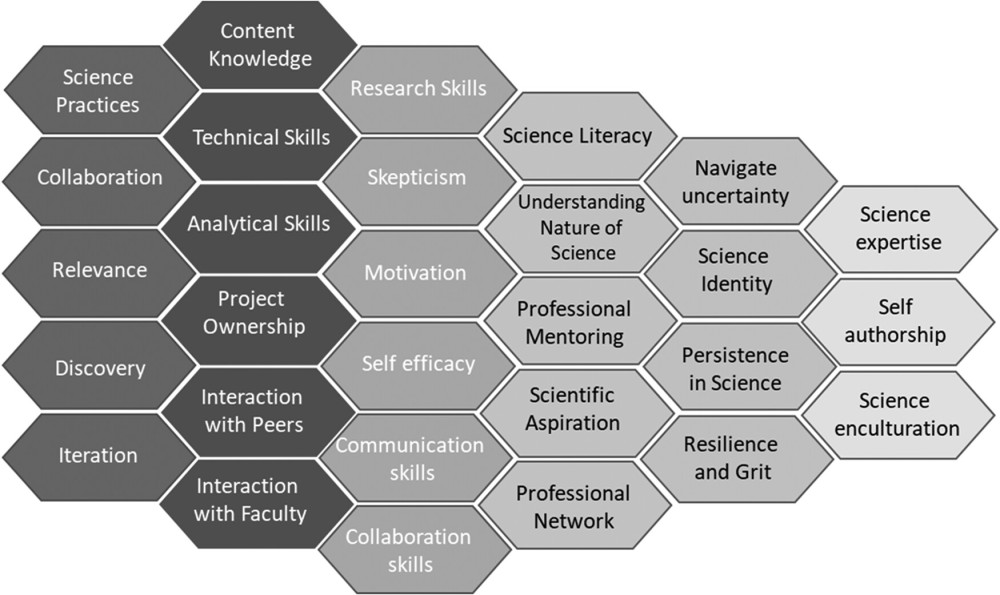
A systematic review of the literature was conducted to identify course-based undergraduate research experiences (CUREs) in science, technology, engineering, and math (STEM) courses within the years 2000 through 2020. The goals of this review were to 1) create a resource of STEM CUREs identified by their discipline, subdiscipline, and level; 2) determine the activities included in each CURE, particularly the primary components listed in the CURE definition as well as specific science practices we identified as key to scientific reasoning; and 3) identify the next steps needed in CURE creation and implementation. Our review found 242 CURE curricula described in 220 total articles, with most described in biology, although STEM disciplines, including chemistry and biochemistry, have begun to publish CURE curricula as well. We also found that most CUREs include the primary components. However, when we look at the specific science practices essential to scientific reasoning, we found that these are less common in many CUREs and are implemented differently. We encourage CURE authors to consider including these science practices and potentially measuring their impact on student outcomes. The present work provides a summary of the current published CUREs, their disciplines, course levels, primary components, and specific science practices.