
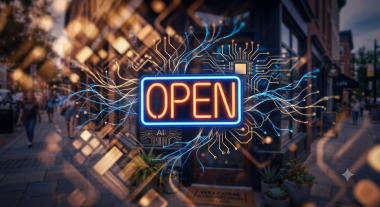
Gemini-generated image with an open sign and nodes coming out of it
Collection

Open Educational Resources and Generative AI

This collection features resources related to the intersection of Open Educational Resources (OER) and the ever-changing landscape of generative AI.

Updated July 2026
Bethany Mickel headshot
Instructional Design & OER Librarian
University Library
View Bio
ES
Instructional Designer
Learning Design & Technology
View Bio

Practical Framework for AI + OER Exploration

EDUCAUSE

This brief article explores how generative AI can extend OER, covering licensing/authorship issues (including AI's murky copyright status) and a "GenAI–OER Adoption Framework" guiding faculty use. It offers practical guidance to start small, disclose AI use, and use transparency to build trust.

Headshot of Bethany Mickel
ES
Bethany Mickel, Emily Scida

This article is approachable as it moves past the usual hype-versus-fear framing of AI in education and offers a genuinely practical structure in the form of the "Six Mode Adoption Framework" for thinking about where and how GenAI can responsibly support OER work. It doesn't shy away from the thorny legal and ethical questions such as copyright ambiguity, data practices, and institutional transparency that anyone working in this space needs to grapple with. The slow, reflective approach feels natural and certainly addresses concerns we've encountered with the infusion of GenAI in the open educational practices space.

View excerpt

Generative artificial intelligence can expand the reach of open educational resources, but educators and institutions need a clear framework for licensing, disclosure, and responsible use.
Was this resource helpful?

Generative AI Tools in Open Educational Resources Guidelines

Affordable Learning Georgia

These guidelines are for faculty creating or revising OER with GenAI, covering copyright/trademark fair use, checking prompts and outputs for infringement, ethically combining AI-generated content with existing OER licenses, and key takeaways from the US Copyright Office's 2025 report.

Headshot of Bethany Mickel
ES
Bethany Mickel, Emily Scida

We found these guidelines especially helpful because they're written specifically for the practical, day-to-day decisions OER creators face when using GenAI, rather than staying at a conceptual level. The examples for checking prompts and outputs for copyright and trademark issues are valuable additions since this is an area where vague advice often leaves instructors unsure of where the actual lines are. The clear breakdown of the US Copyright Office's findings also makes this a resource we'd point colleagues to first when they're trying to sort out what's legally required versus what's simply good ethical practice.

View excerpt

Using generative AI tools will normally fall under a different legal conversation than legal questions on building models. Regardless of questions of copyright legality, educators have an ethical obligation to use AI tools in good faith, allowing for the transformation, education, and critique without knowingly replicating single copyrighted or trademarked works.

Was this resource helpful?

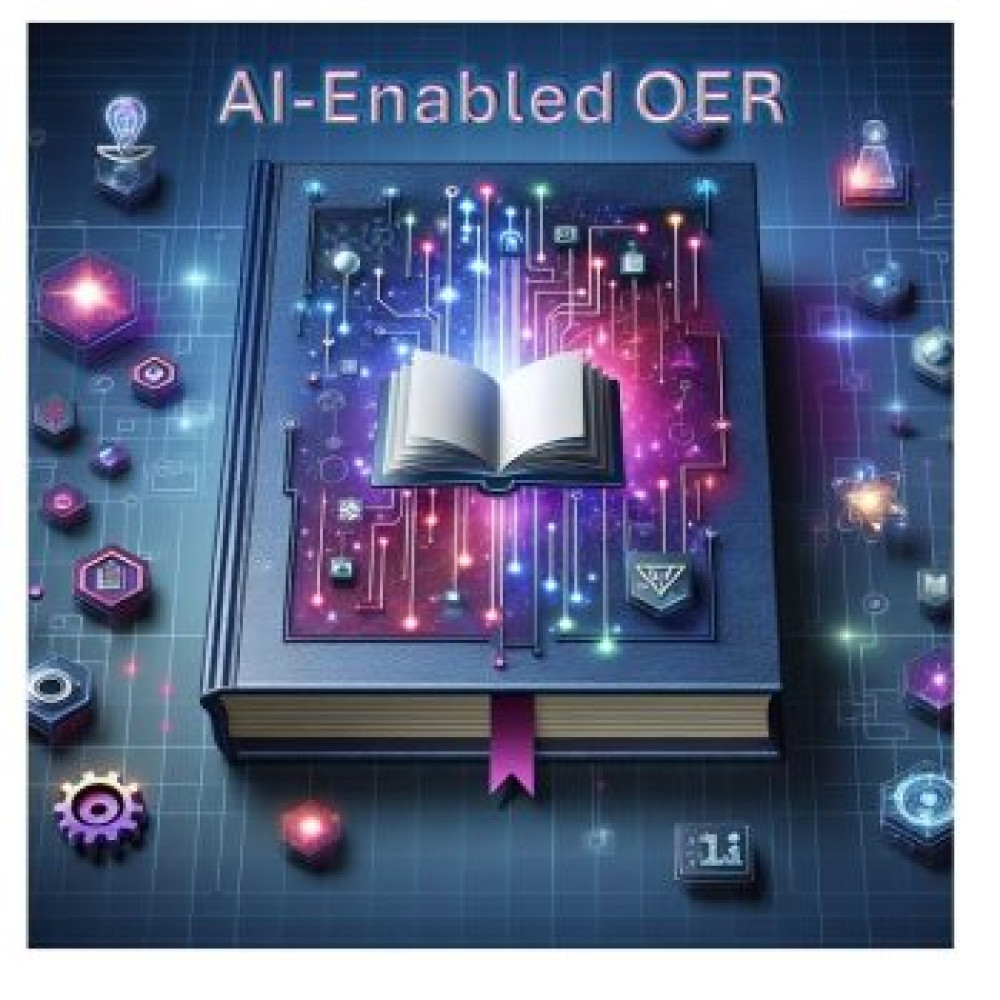
AI-Enabled OER

Travis Dolence, Fran Kennedy, Marcus Lacher, Jody Ondich, Darci Spangler, and Melissa Williams

This book guides educators in using AI to develop effective OER while addressing common adoption barriers like time constraints, quality concerns, and limited technical skills. It also emphasizes the professional, ethical, sustainable, and equitable perspectives on AI in education.

Headshot of Bethany Mickel
ES
Bethany Mickel, Emily Scida

We found this resource especially useful because it moves beyond high-level discussion and offers something instructors can actually put into practice, grounded in a real survey of educator comfort levels with AI rather than assumptions about what faculty need. We also appreciate that it ties its guidance back to UNESCO's OER Recommendation, giving it a clear ethical and professional framework rather than treating GenAI use as a purely technical add-on. For anyone in our collection's audience looking for a single, practical guide to working through the barriers of AI-assisted OER development, we'd recommend starting here.

View excerpt

AI-Enabled OER

Travis Dolence, Fran Kennedy, Marcus Lacher, Jody Ondich, Darci Spangler, and Melissa Williams
Open resource

There are many beliefs, ranging from fantastically overoptimistic to wildly dystopian, swirling around the relationship between Generative AI and Open Educational Resources (OER) as of this writing in 2025. The reality is somewhere in-between, still to be determined, and highly contested.

Was this resource helpful?

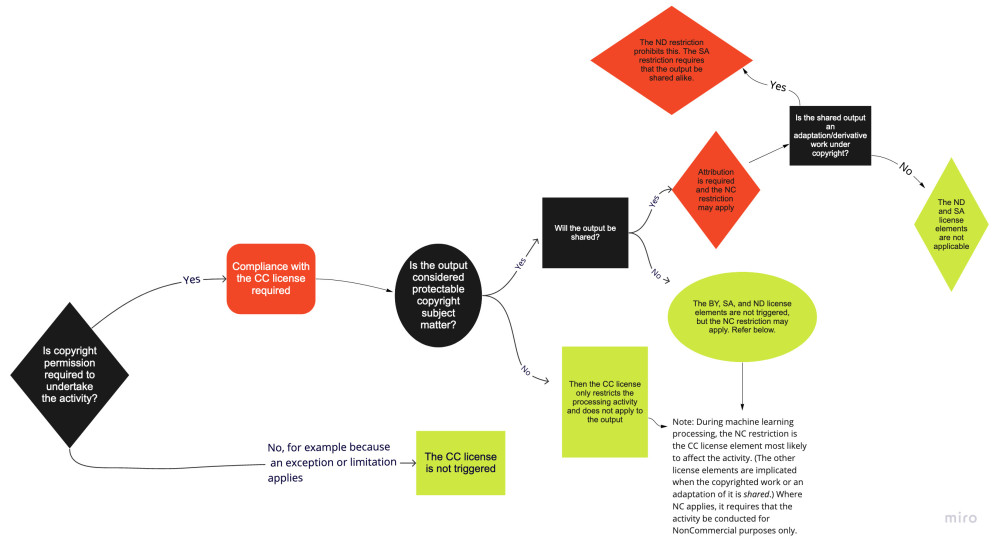
Understanding Creative Commons Licenses in Relation to Generative AI

Creative Commons

This piece includes a thoughtful discussion of the intricacies of copyright law and how they pertain to AI-generated content.

Headshot of Bethany Mickel
ES
Bethany Mickel, Emily Scida

We recommend this Creative Commons resource for anyone navigating the intersection of OER and GenAI. It addresses considerations such as when openly licensed works are used to train AI. It also clarifies that fair use and the reality that text-and-data-mining exceptions may already permit the use of AI scraping regardless of license terms. Honest and forthright, we appreciate that it acknowledges the ethical dimensions that copyright alone cannot resolve and that it encourages a broader, community-driven approach to responsible AI use in open education contexts.

View excerpt

Generative AI presents an amazing opportunity to be a transformative tool that supports creators — both individuals and organizations — provides new avenues for creation, facilitates better sharing, enables more people to become creators, and benefits the commons of knowledge, information, and creativity for all.

But there are serious concerns, such as issues around author recognition and fair compensation for creators (and the labor market for artistic work in general), the potential flood of AI-generated works on the commons making it difficult to find relevant and trustworthy information, and the disempowering effect of the privatization and enclosure of AI services and outputs, to name a few.

For many creators, these and other issues may be a reason not to share their works at all under any terms, not just via CC licensing. CC wants AI to augment and support commons, not detract from it, and we want to see solutions to these concerns to avoid AI turning creators away from contributing to the commons altogether.

Was this resource helpful?

Leveraging Community

OER Commons

This OER Commons hub centralizes resources on AI in open education, fostering a community of practice while helping educators and administrators understand AI tools' costs, benefits, uses, limitations, and ethical policy considerations.

Headshot of Bethany Mickel
ES
Bethany Mickel, Emily Scida

This hub is a valuable starting point because it brings together a wide range of resources on GenAI in open education in one centralized place. We value that it's grounded in the principles of a community practice as it is highly participatory and encourages contributions. This hub is a shared initiative of University of Virginia Libraries and the Institute for the Study of Knowledge Management (ISKME), and funded by support of the Institute of Museum and Library Services.

View excerpt

Welcome to the AI and OER Community Hub! The goals of this hub are:

  • Provide a single space for people to find and share resources related to artificial intelligence in an open educational context;
  • Support the development of a community of practice around AI in open education;
  • Help educators and administrators understand the various issues (costs, benefits, uses, and limitations) of different AI tools and techniques;
  • Drive forward movement on policies and practices related to ethical use of AI in education.

Was this resource helpful?

Scaffolded Upskilling

OER Commons

This free UNESCO course is aimed at helping educators explore the intersection of OER and generative AI through discovering GenAI tools, identifying quality evaluation criteria, and practicing GenAI resource curation and sharing.

Headshot of Bethany Mickel
ES
Bethany Mickel, Emily Scida

We found this UNESCO course to be a useful complement to the more conceptual pieces in our collection since it's structured as a hands-on professional development rather than just a framework or think-piece. We particularly value that it grounds participants in concrete quality evaluation criteria for GenAI resources, which is something often glossed over in broader discussions of AI and OER.

View excerpt

Course Goals:

  • Utilize collaborative tools in the OER Commons digital library to identify and share resources, and have discussions
  • Explore different Gen-AI tools and implementations
  • Identify best practices for Gen-AI OER while engaging with ROAMX indicators
  • Identify evaluation criteria for Gen-AI OER incorporating the ROAMX indicators
  • Curate Gen-AI OER utilizing evaluation criteria
Was this resource helpful?

Want to recommend a resource to add to this collection? Send us an email.