Student at desk black and white
Collection

Standards-Based Grading

These resources provide an introduction to Standards-Based Grading, an alternative grading philosophy in which students' grades are based primarily on the number of content standards they demonstrate mastery of at any point in the term.

Updated May 2025
Drew Lewis headshot
Director of Research
Center for Grading Reform
View Bio
01

A Beginner’s Guide to Standards Based Grading

On Teaching and Learning Mathematics

This short blog post by College of Charleston math professor Kate Owens provides an introduction to and overview of Standards-Based Grading.

Headshot of Drew Lewis
Drew Lewis

Kate provides a wonderful overview of Standards-Based Grading, suitable for instructors who may have heard the term and are curious what it entails.

View excerpt

The goal of SBG (Standards-Based Grading) is to shift the focus of grades from a weighted average of scores earned on various assignments to a measure of mastery of individual learning targets related to the content of the course. Instead of informing a student of their grade on a particular assignment, a standards-based grade aims to reflect that student’s level of understanding of key concepts or standards. Additionally, students are invited to improve their course standing by demonstrating growth in their skills or understanding as they see fit. In this article I will explain the way I implemented SBG and describe some benefits and some drawbacks of this method of assessment.
Was this resource helpful?
02

What is... Standards Based Grading?

Mastery Grading

This presentation from the 2022 Grading Conference describes in detail two implementations of Standards-Based Grading, addressing many of the questions commonly asked about the grading approach.

Headshot of Drew Lewis
Drew Lewis

Sharona Krinsky and Kate Owens give an overview of Standards-Based Grading during a session at the 2022 Grading Conference.

Was this resource helpful?
03

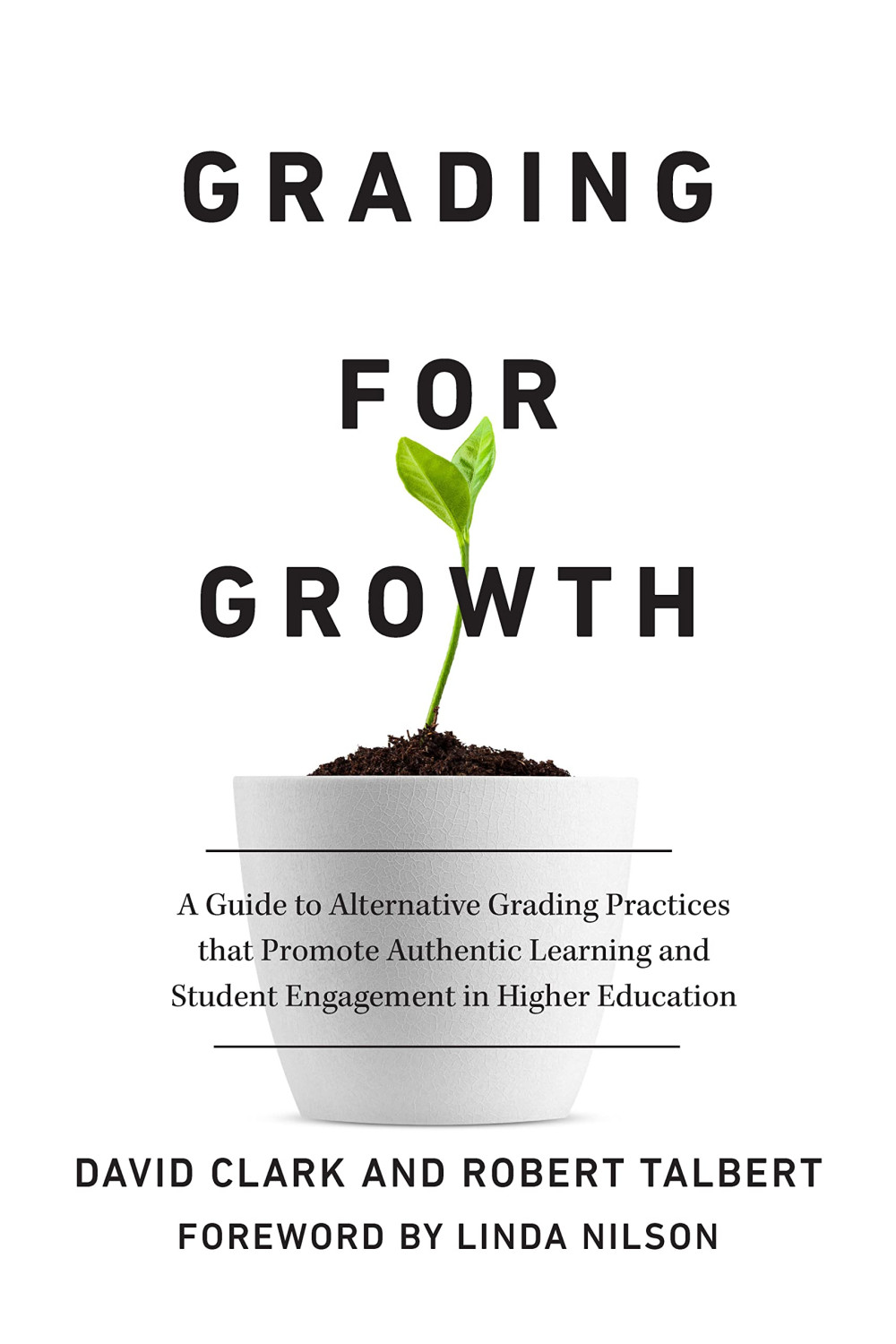
Grading for Growth

David Clark and Robert Talbert

This book provides a multi-disciplinary perspective on alternative grading practices, including Standards-Based Grading.

Headshot of Drew Lewis
Drew Lewis

David Clark and Robert Talbert's book is an excellent introduction to Standards-Based Grading and related alternative grading systems. Part 2 of the book offers a collection of "case studies," where they describe the nitty gritty details of particular instructors' grading practices.

View excerpt

Grading for Growth

David Clark and Robert Talbert
Open resource

Recognizing that traditional grading penalizes students in the learning process by depriving them of the formative feedback that is fundamental to improvement, the authors offer alternative strategies that encourage revision and growth. Alternative grading is concerned with students’ eventual level of understanding. This leads to big changes: Students take time to review past failures and learn from them. Conversations shift from “why did I lose a point for this” to productive discussions of content and process. Alternative grading can be used successfully at any level, in any situation, and any discipline, in classes that range from seminars to large multi-section lectures. This book offers a comprehensive introduction to alternative grading, beginning with a framework and rationale for implementation and evidence of its effectiveness. The heart of the book includes detailed examples – including variations on Standards-Based Grading, Specifications Grading, and ungrading -- of how alternative grading practices are used in all kinds of classroom environments, disciplines and institutions with a focus on first-hand accounts by faculty who share their practices and experience. The book includes a workbook chapter that takes readers through a step-by-step process for building a prototype of their own alternatively graded class and ends with concrete, practical, time-tested advice for new practitioners.

Was this resource helpful?
04

Syllabi Repositories

Center for Grading Reform

The Center for Grading Reform maintains links to a collection of repositories of syllabi, sorted by discipline.

Headshot of Drew Lewis
Drew Lewis

This is a wonderful collection of syllabi from instructors in several STEM disciplines that use alternative grading (primarily standards-based grading, but also other varieties). Read through these to get inspiration for how to structure a standards-based grading system in your own class.

Was this resource helpful?
05

Applying a Standards-Based Grading Framework Across Lower Level Mathematics Courses

Jason Elsinger and Drew Lewis

This article describes a framework of Standards-Based Grading suitable for use in a variety of courses. It describes the experience of multiple instructors adapting this framework to various courses at four different institutions, including both small liberal arts colleges and large universities, and in class sizes ranging from small to large.

Headshot of Drew Lewis
Drew Lewis

In this article, Jay Elsinger and I describe a Standards-Based Grading system that has been adapted across a range of courses and institutions, with different student bodies. We describe different variations of the framework that you can adapt to your own particular instructional context.

View excerpt

In this paper, we offer a blueprint for an alternative grading scheme, namely standards-based grading (SBG). Although others may use the term a little more broadly, we will use SBG to refer to a grading system in which:

  1. Students are provided with a clear list of course learning objectives (referred to as standards) they must master.
  2. Final course grades are based primarily on how many standards the student masters.
  3. Students are provided ample opportunities to reassess mastery of any standard.
  4. Attempts are graded using a form of pass/fail grading, and only the best mark is used toward the course final grade.

Was this resource helpful?

Want to recommend a resource to add to this collection? Send us an email.