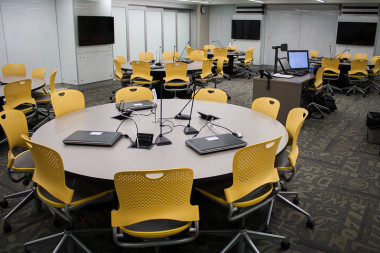

A TILE classroom at the University of Iowa, featuring five tables with three laptops and microphones
Collection

Teaching in Active Learning Classrooms

How does classroom space shape teaching and learning? What does it mean to teach in an active learning classroom (ALC)? This collection brings together resources that explore these questions through research, instructor experiences, practical strategies, and reflection. 


For resources focused on active learning more broadly, see the companion Teaching Hub collection, Active Learning. 

Updated August 2026
Allie Brandriet headshot
Assistant Director
University of Iowa Center for Teaching
View Bio

What Are Active Learning Classrooms?

University of Illinois Chicago Planning, Sustainability and Project Management

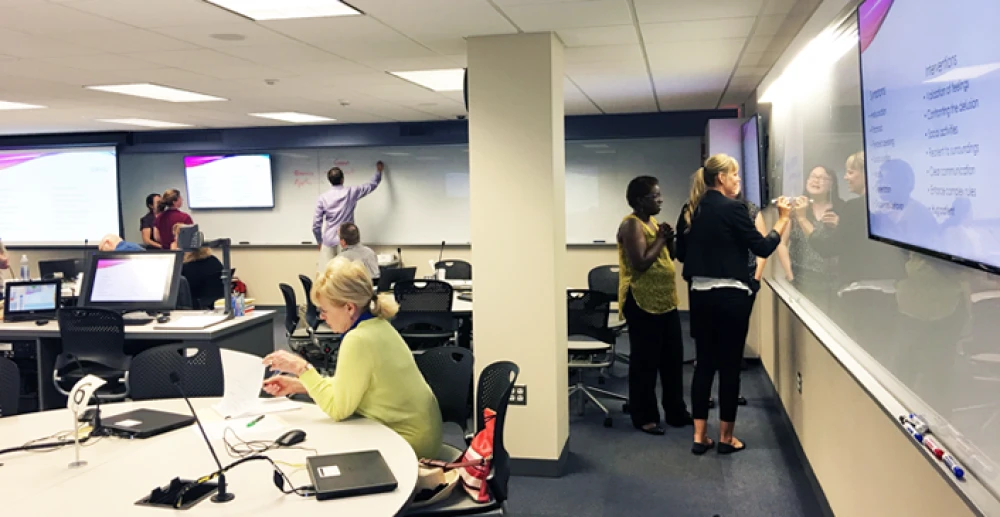
If you're new to active learning classrooms, this resource offers an introduction to common room designs, like SCALE-UP, TEAL, TILE, and ALCs. Classroom videos, along with instructor and student perspectives, show how these spaces can influence participation, group work, and classroom interactions.

Headshot of Allie Brandriet
Allie Brandriet

If you’re new to active learning classrooms, it can be difficult to imagine how the physical space might shape your teaching. This resource provides a useful starting point by introducing several common classroom layouts and sharing examples from instructors and students. What I appreciate most about this resource are the videos, which move beyond descriptions of room design to show how instructors and students experience these environments. These examples can help instructors develop a clearer sense of what it might look like to teach in an active learning classroom and how they might use the space to support their learning goals.

View excerpt

SCALE-UP

University of Illinois Chicago Planning, Sustainability and Project Management
Open resource

SCALE-UP stands for “Student-Centered Active Learning Environment with Upside-down Pedagogies” or “Student‐Centered Active Learning Environment for Undergraduate Programs.” SCALE-UP classrooms include round tables of nine students to facilitate group interactions, whiteboards near each table, networked computers, and an instructor area located near the center of the room.

Other acronyms that are used by universities for SCALE-UP environments are:

  • TEAL – Technology-Enabled Active Learning
  • ALC – Active Learning Classrooms
  • TILE – (Spaces to) Transform, Interact, Learn, Engage
Was this resource helpful?

How Do The Features of Active Learning Classrooms Support Engagement?

Journal of Learning Spaces

What difference does the room itself make? This open-access article explores how features such as whiteboards, flexible layouts, instructor movement throughout the room, and technology can influence student interaction and engagement.

Headshot of Allie Brandriet
Allie Brandriet

What I find particularly valuable about this article is that it helps connect classroom layout and features to activity design and teaching decisions. Rather than simply describing common features of active learning classrooms, it explores how those features may influence the ways students learn and engage during class. This perspective can help instructors think intentionally about how they structure activities and use the space to support student learning.

View excerpt

A responsive case study evaluation approach utilizing interviews and focus groups collected student and faculty perspectives on examined how instructors and students utilized a newly redesigned active learning space at Iowa State University and the relationship of this design with environmental and behavioral factors of student engagement. The findings demonstrate how classroom design affords engagement through low-cost learning tools and a flexible, open, student-centered space afforded a variety of active learning strategies. In addition, this case study highlights the importance of conducting assessment on classroom redesign initiatives to justify and improve future classroom spaces.

Was this resource helpful?

How Do Active Learning Classrooms Support Student Learning, Instructor Practice, and Institutional Culture?

Heliyon

If you're interested in what research says about active learning classrooms, this open-access review synthesizes findings from across the literature. It provides an overview of how these spaces influence student learning, instructional practices, and institutional culture.

Headshot of Allie Brandriet
Allie Brandriet

I appreciate that this article helps readers understand the broader evidence behind active learning classrooms. The review brings together research on how these spaces may support student learning, influence teaching practices, and shape institutional approaches to teaching and learning. One takeaway that stood out to me is that active learning classrooms may contribute to broader conversations about evidence-based teaching across an institution.

View excerpt

Active Learning Classrooms (ALCs) are learning spaces specially designed to optimize the practice of active learning and amplify its positive effects in learners from young children through university-level learners. As interest in and adoption of ALCs has increased rapidly over the last decade, the need for grounded research in their effects on learners and schools has grown proportionately. In this paper, we review the peer-reviewed published research on ALCs, dating back to the introduction of “studio” classrooms and the SCALE-UP program up to the present day. We investigate the literature and summarize findings on the effects of ALCs on learning outcomes, student engagement, and the behaviors and practices of instructors as well as the specific elements of ALC design that seem to contribute the most to these effects. We also look at the emerging cultural impact of ALCs on institutions of learning, and we examine the drawbacks of the published research as well as avenues for potential future research in this area.

Was this resource helpful?

What Challenges Might I Experience? How Do I Address Them?

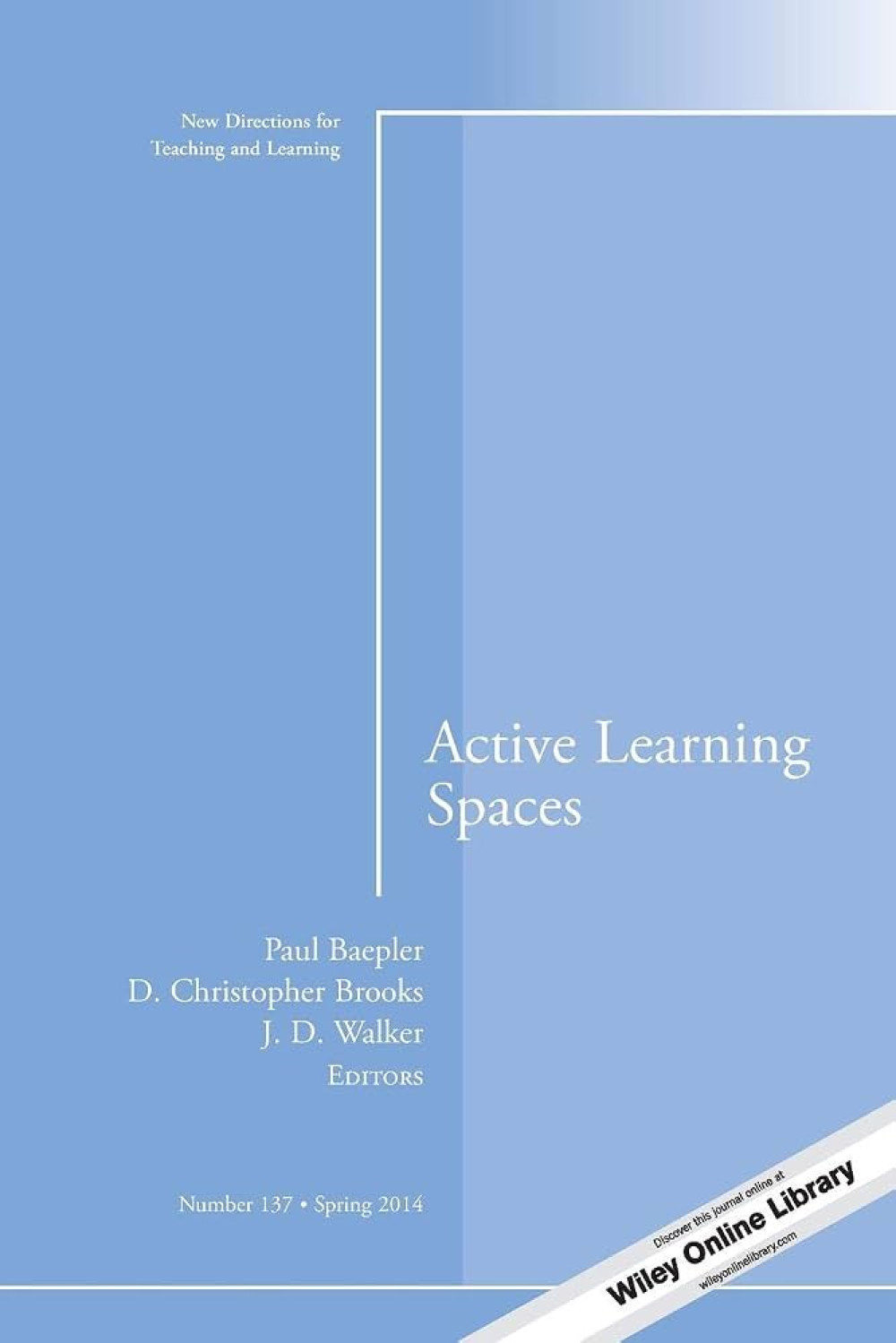
New Directions for Teaching and Learning

Teaching in active learning classrooms can introduce new challenges. This chapter discusses common concerns and offers practical strategies informed by experience. It is particularly useful for those preparing to teach in these spaces for the first time.

Headshot of Allie Brandriet
Allie Brandriet

One of the strengths of this chapter is that it describes practical challenges instructors may not anticipate until they begin teaching in an active learning classroom. For example, the instructor may no longer be the focal point of the room, and the learning environment may introduce more distractions. The examples and strategies provided can help instructors think ahead about how they will design and facilitate learning activities in these spaces. More broadly, it acknowledges that active learning classrooms can feel different from more traditional teaching environments and may challenge some of our assumptions about how teaching, learning, and classroom space work together. This perspective can help instructors anticipate potential challenges, make intentional decisions, and feel more prepared.

View excerpt

Active learning classrooms (ALCs) provide opportunities for increased student engagement and interaction with classmates and the instructor. Reports indicate that students in these classrooms outperform their peers in traditional classrooms (Brooks 2011; Walker, Brooks, and Baepler 2011). In addition to these advantages, ALCs also present challenges for instructors who are used to teaching in more traditional classrooms and for students who are used to learning in these environments. In this chapter, we outline common teaching challenges in ALCs and provide strategies for overcoming them. These challenges and strategies come from the experiences of instructors we interact with in our work as teaching consultants and from our own experience teaching in ALCs. We begin with some background describing the differences between traditional classrooms and ALCs.

Active Learning Spaces : New Directions for Teaching and Learning, Number 137, edited by Paul Baepler, et al., John Wiley & Sons, Incorporated, 2014. ProQuest Ebook Central, http://ebookcentral.proquest.com/lib/uva/detail.action?docID=1662688.

Created from uva on 2026-08-31 19:15:00.

Was this resource helpful?

How Can Institutions Support Teaching in Active Learning Classrooms?

EDUCAUSE Review

This article explores what two universities learned as they supported instructors as part of their active learning classroom initiatives. The authors highlight the role of faculty development, campus partnerships, and ongoing support in helping instructors adapt their teaching to these environments.

Headshot of Allie Brandriet
Allie Brandriet

One message that stood out to me in this article is that learning to teach in an active learning classroom can take time and support. The case studies illustrate how instructors benefited from opportunities to experiment, learn from colleagues, and receive support as they adapted their teaching to these environments. This perspective may be particularly valuable for educational developers, administrators, and leaders who are thinking about how to support instructors in teaching in active learning classrooms.

View excerpt

Although designed to support innovative teaching and learning practices, to succeed, active learning classrooms must be accompanied by sustained and intentional faculty development programs. Here, we address this crucial link by highlighting how two programs — the University of Iowa (Iowa) Transform, Interact, Learn, Engage (TILE) program3 and the Indiana University (Indiana) Mosaic Initiative4 — facilitate faculty development. Although both universities have spent the past several years creating new classrooms that support active learning, each institution recognized that simply adding these new classrooms was not enough. At the heart of the TILE and Mosaic programs lies an emphasis on professional development for faculty teaching in active learning classrooms, which differs fundamentally from teaching in more traditional classrooms.

Here, we explore this culture change at each university, starting with Iowa's TILE program. We first describe our early faculty development programs and their current formats, then offer case studies, and finally, explore our respective faculty development programs' wide-ranging, long-term impacts on teaching and learning.

Was this resource helpful?

How Can I Reflect on My Teaching in an Active Learning Classroom?

Journal of Learning Spaces

This observation tool (ALCOT) was designed specifically for active learning classrooms. It supports self-reflection, peer observation, and conversations about teaching by helping instructors consider how classroom features, teaching practices, and activity design shape student engagement.

Headshot of Allie Brandriet
Allie Brandriet

Teaching is an ongoing process of learning from experience and making sense of what happens in our classrooms. What I appreciate about the ALCOT is that it provides a structured opportunity for instructors to reflect on their teaching. This tool can help instructors better understand how students are experiencing the course and how activity design, instructional practices, and physical space may be shaping learning.

There are many classroom observation tools available, and it's possible that an instructor may find that another tool might better fit their goals. However, the ALCOT is listed here because it is relatively easy to use, designed specifically for active learning classrooms, and intended to support instructor reflection. The ALCOT itself can be found at the end in Appendix D.

View excerpt

In this article, we present a revised version of the active learning classroom observation tool (ALCOT), designed in 2015, to support instructor reflection on instructional approaches applied within active learning classrooms. The design of active learning classrooms and teaching approaches within them have changed significantly since the initial development of the ALCOT. Inspired by these changes, we have decided to update the ALCOT to address the new developments in classroom designs and instruction. In addition to updates to the ALCOT, this article also lays out ways the new ALCOT can be used for additional avenues of faculty support. It also suggests how classroom observation can facilitate conversation among a variety of stakeholders that could contribute to broad institutional change regarding active learning and active learning classrooms.

Was this resource helpful?

Where Can I Learn More?

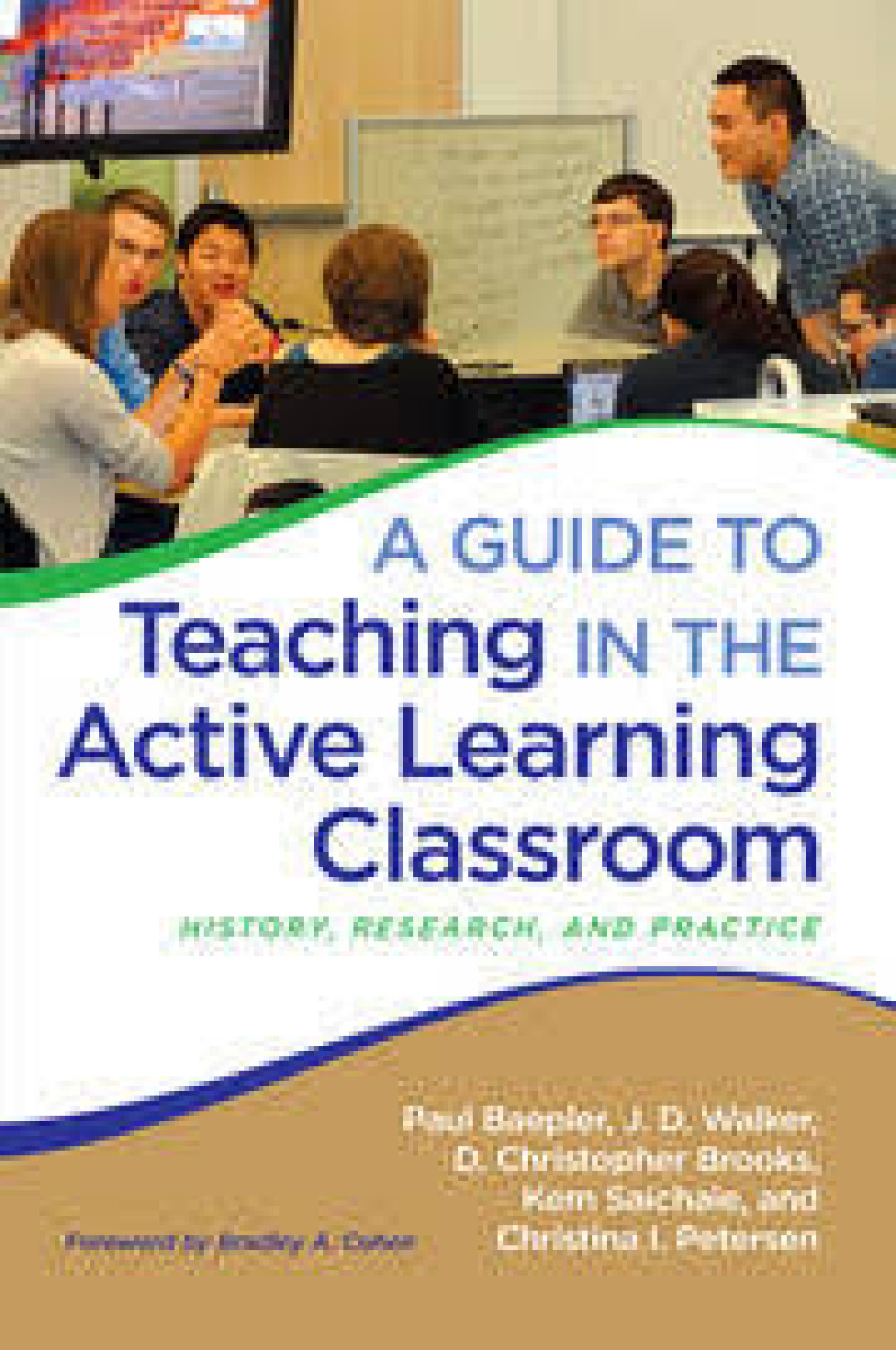
Paul Baepler, J. D. Walker, D. Christopher Brooks, Kem Saichaie, Christina I. Petersen

This book brings together research and practical guidance on teaching in active learning classrooms. Topics include the history of active learning classrooms, practical teaching and assessment strategies, example activities, group management, and common implementation challenges.

Headshot of Allie Brandriet
Allie Brandriet

Many of the topics explored throughout this collection come together in this book. The authors draw on research, classroom examples, and practical experiences to discuss both the opportunities and challenges of teaching in active learning classrooms. For instructors who would like to continue learning about active learning classrooms, the book provides additional context, examples, and strategies while examining the relationships among classroom space, teaching practices, and student learning.

View excerpt

A Guide to Teaching in the Active Learning Classroom

Paul Baepler, J. D. Walker, D. Christopher Brooks, Kem Saichaie, Christina I. Petersen
Open resource

While Active Learning Classrooms, or ALCs, offer rich new environments for learning, they present many new challenges to faculty because, among other things, they eliminate the room’s central focal point and disrupt the conventional seating plan to which faculty and students have become accustomed.The importance of learning how to use these classrooms well and to capitalize on their special features is paramount. The potential they represent can be realized only when they facilitate improved learning outcomes and engage students in the learning process in a manner different from traditional classrooms and lecture halls.This book provides an introduction to ALCs, briefly covering their history and then synthesizing the research on these spaces to provide faculty with empirically based, practical guidance on how to use these unfamiliar spaces effectively. Among the questions this book addresses are:• How can instructors mitigate the apparent lack of a central focal point in the space?• What types of learning activities work well in the ALCs and take advantage of the affordances of the room?• How can teachers address familiar classroom-management challenges in these unfamiliar spaces?• If assessment and rapid feedback are critical in active learning, how do they work in a room filled with circular tables and no central focus point?• How do instructors balance group learning with the needs of the larger class?• How can students be held accountable when many will necessarily have their backs facing the instructor?• How can instructors evaluate the effectiveness of their teaching in these spaces?This book is intended for faculty preparing to teach in or already working in this new classroom environment; for administrators planning to create ALCs or experimenting with provisionally designed rooms; and for faculty developers helping teachers transition to using these new spaces.

Was this resource helpful?

Want to recommend a resource to add to this collection? Send us an email.