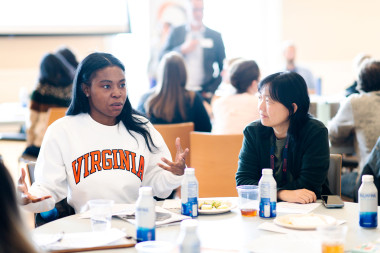
Summit participants
Collection

Why Pedagogical Partnerships Matter

In pedagogical partnerships, students and teachers contribute collaboratively “to curricular or pedagogical conceptualization, decision-making, implementation, investigation, or analysis” (Cook-Sather et al., 2014). This collection explores the question: Why do pedagogical partnerships matter?

Updated August 2025
Alison Cook-Sather headshot
Mary Katharine Woodworth Professor of Education and Director, Teaching and Learning Institute
Bryn Mawr College
View Bio
01

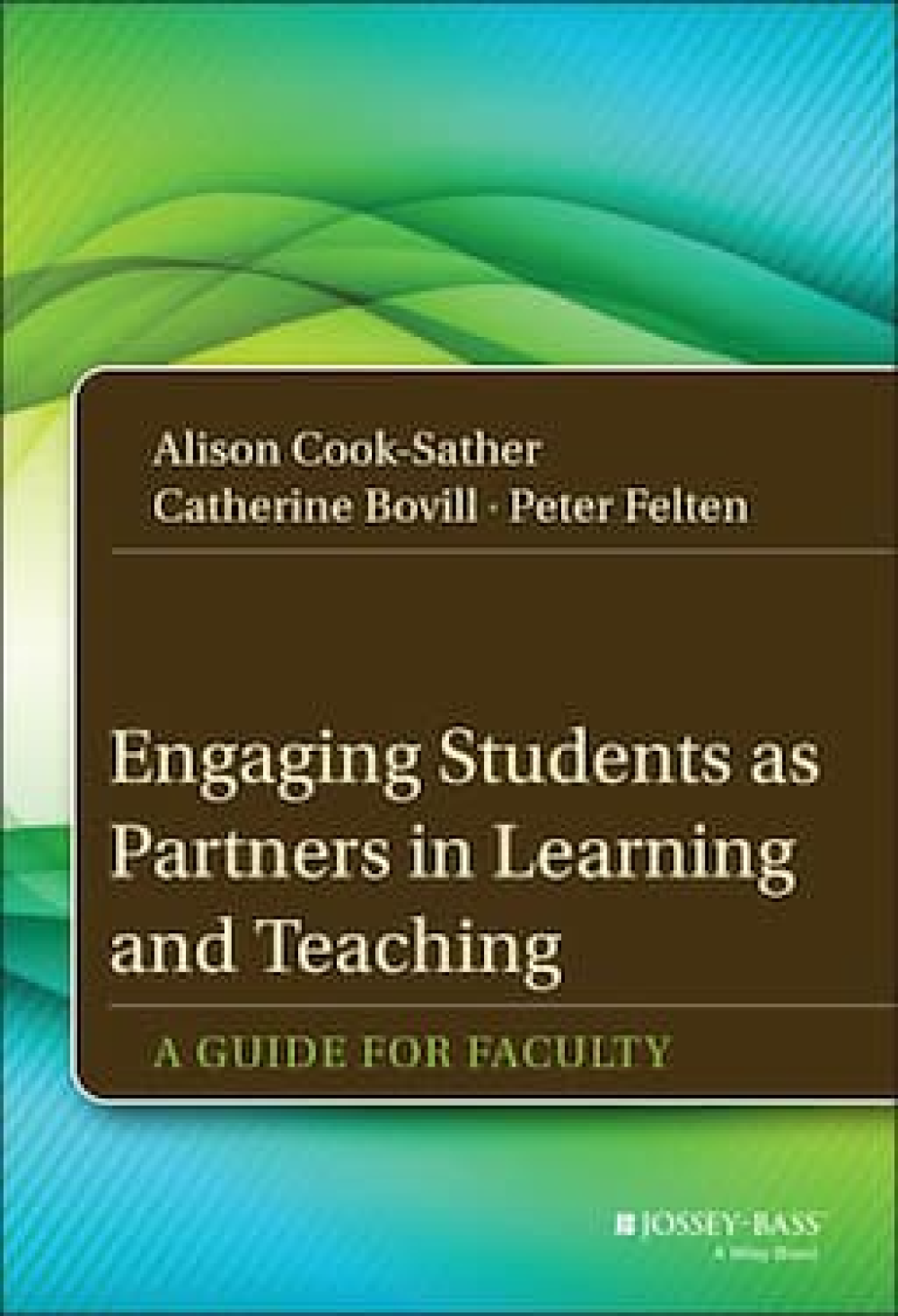
Engaging Students as Partners in Learning and Teaching: A Guide for Faculty

Alison Cook-Sather, Catherine Bovill, and Peter Felten

What are pedagogical partnerships? This guide provides a thorough introduction to the concept illustrated by concrete examples from a range of teaching contexts.

Headshot of Alison Cook-Sather
Alison Cook-Sather

One of the first books to name and define pedagogical partnership, this text provides theoretical grounding, describes various models for creating and supporting such partnerships, and includes helpful responses to a range of common questions. Capturing the ways that pedagogical partnerships matter in building engaging and effective pedagogical approaches, the voices of faculty, students, and administrators who have hands-on experience with partnership programs bring this work alive.

View excerpt

Partnerships are based on respect, reciprocity, and shared responsibility between students and faculty. These qualities of relationship emerge when we are able to bring students’ insights into discussions about learning and teaching practice in meaningful ways — ways that make teaching and learning more engaging and effective for students and for ourselves. In our own teaching and in the partnership work we have studied, we have found that respect, reciprocity, and shared responsibility are fostered when we draw on students’ insights not only through collecting their responses to our courses but also through working with them to study and design teaching and learning together.
Was this resource helpful?
02

Centering Humanism in STEM Education through Student-Faculty Pedagogical Partnerships.

Frontiers in Education

How can pedagogical partnerships humanize STEM education? This literature review explores the positive impacts partnerships can have on student and faculty partners, as well as on enrolled students, in STEM courses.

Headshot of Alison Cook-Sather
Alison Cook-Sather

Co-authored by two students and a faculty member, this article reviews 32 publications focused on pedagogical partnership in STEM. It addresses the question: How do faculty and student partners experience, perceive, and act on the potential of student-faculty pedagogical partnership to humanize STEM education? Full of quotes from faculty and student partners across institutions, the article illustrates how partnerships matter in STEM fields, which are often seen as exclusionary and inattentive to the human experience of students and teachers.

View excerpt

We propose that one way to address the exclusionary culture, the lack of student voices in developing inclusive learning environments, and the overall dearth of humanism in STEM education is through the human and humanizing engagement that student-faculty pedagogical partnerships enact and support. As Bunnell et al. (2021) suggest, ‘learning from, partnering with, and highlighting the lived, subjective experiences of students in the classroom is a potentially powerful step towards inclusive education (de Bie et al., 2021; Cook-Sather, 2015, 2018),’ and student-faculty pedagogical partnership ‘may be particularly well suited” to addressing challenges “related to inclusive education in STEM’ (28). The transformative potential of the now-global practice of pedagogical partnership has been documented in a growing body of research on such partnership in STEM education. This article offers a review of a cross-section of that scholarship.

Was this resource helpful?
03

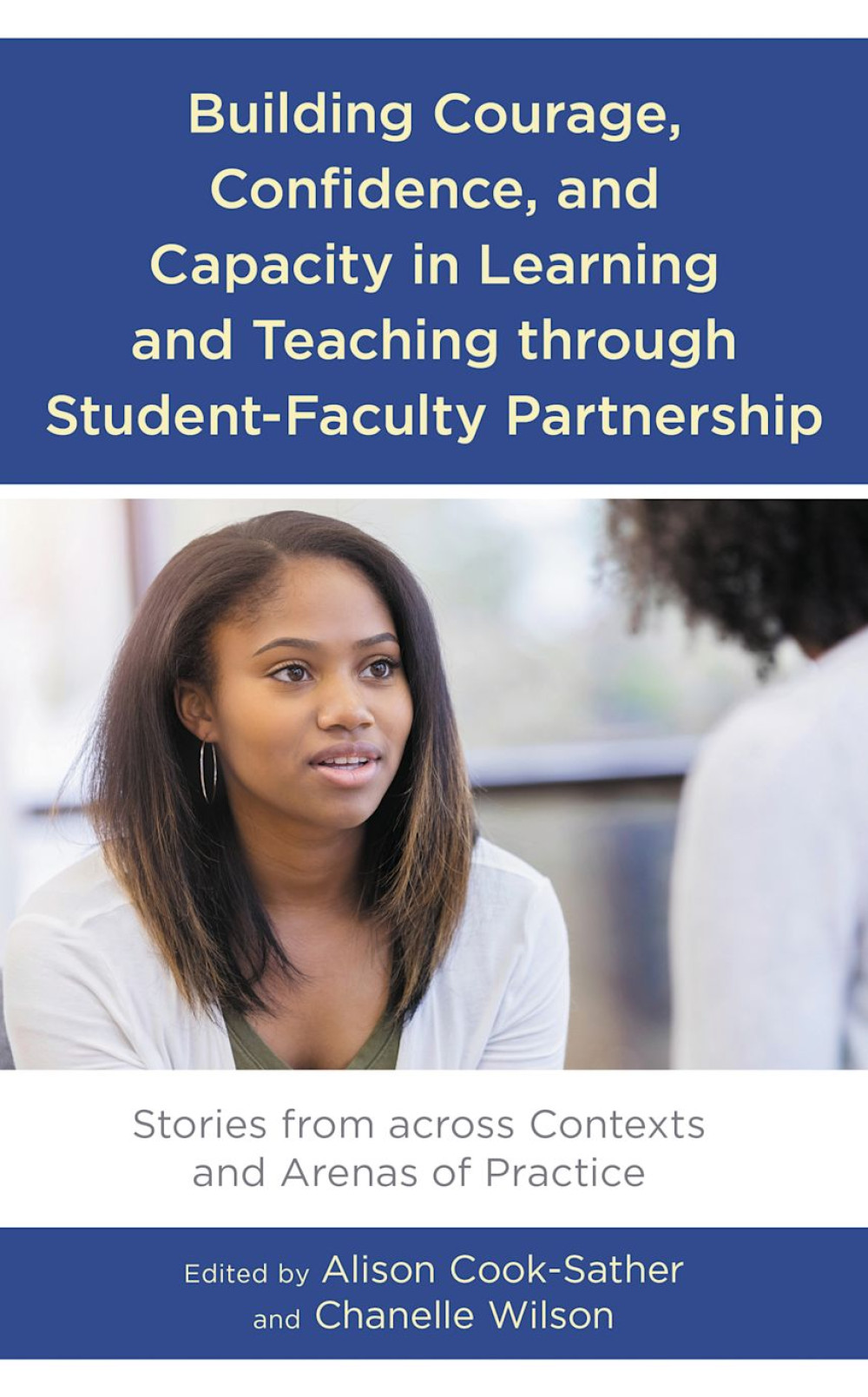
Building Courage, Confidence, and Capacity in Learning and Teaching through Pedagogical Partnership: Stories from across Contexts and Arenas of Practice

Alison Cook-Sather and Chanelle Wilson (Eds.)

Pedagogical partnerships support co-creation of learning and teaching experiences around the world. This collection features the stories of faculty-student teams telling their partnership stories.

Headshot of Alison Cook-Sather
Alison Cook-Sather

If you are looking for a range of stories of pedagogical partnership from around the world, this book includes chapters co-authored by student-faculty pairs from eight countries. The stories reveal how pedagogical partnerships matter through fostering learning, confidence, capacity, and a sense of belonging that contribute to the creation of equitable, engaging, and empowering learning and teaching.

View excerpt

From the Foreword, by Kelly E. Matthews:

What does it mean to be in pedagogical partnership? How does it feel? What does it sound like? Who decides what happens? Who is learning in pedagogical partnership, how does that learning unfold, and what is being learned? Alison Cook-Sather and Chanelle Wilson have created a space for us to understand the stories of pedagogical partnership—thick descriptions giving life to what it means for students to be constructing pedagogical knowledge together with teaching staff (including faculty/academics, educational developers, librarians). We expect university teaching staff to have pedagogical knowledge and know-how (to what extent that they do is a different story). Yet the pedagogical partnerships described in rich, vivid, and (often) playful detail in this collection clearly reveal students’ pedagogical knowledge as well. Taken together, the combined pedagogical knowledge, as demonstrated in the following 10 chapters co-authored by 14 students and 10 teaching staff, extends and exceeds the capacity of individual learners and teachers. I understand why courage features as a strong line of sight throughout the book and in the title. It takes courage to challenge the status quo. It takes courage to imagine a different possibility and formation for learning in higher education. It takes courage to enact a different way of being a learner and a teacher that recognizes expertise through experience. It takes courage to name your experience, author your story, and then open yourself up to public gaze and comment.

Was this resource helpful?
04

“The Virtues of Not Knowing”: How “Unknowingness” in Pedagogical Partnership Prepares Student Partners to Navigate Complexity, Uncertainty, and Change in Pursuit of Equity

Higher Education Research & Development

The student voices in this article show how pedagogical partnerships can support student partners as they grapple with complexity—one of the most important but challenging elements of higher education and life beyond it.

Headshot of Alison Cook-Sather
Alison Cook-Sather

Drawing on Eleanor Duckworth’s (1987) timeless essay, this article lifts up the words of student partners who have, through working in student-faculty pedagogical partnerships, developed a mindset and mode of engagement that allow them to find in not knowing first challenge, then fulfillment, and ultimately commitment to navigating complexity, uncertainty, and change with an equity orientation. The article illuminates how pedagogical partnerships matter in preparing students for a complex, precarious, and uncertain world.

View excerpt

Despite the reality that capacity to navigate uncertainty and change rather than prepare for any kind of fixedness and stability (Ilgen et al., 2019; Renn et al., 2011; Yurkofsky, 2022) is what is required in and by the world, educational institutions, including higher education, continue to focus on knowing and certainty, particularly knowing the right answer. As former SaLT student consultant Sarah Jenness (2013) writes: ‘school militates against uncertainty because we focus on getting the right answers as an end product as opposed to learning as a continuous phenomenon’ (p. 2). …Considering both her own learning and what matters most in education, Jenness (2013) concludes: ‘maybe what we need as students are spaces and relationships that let us sit with uncertainty and learn from it rather than rush from it to the “right” answers (p. 3).”

Was this resource helpful?
05

Reviving the Construct of “Mattering” in Pursuit of Equity and Justice in Higher Education: Illustrations from Mentoring and Partnership Programs

Alison Cook-Sather, Peter Felten, Kaylyn (Kayo) Piper Stewart, and Heidi Weston

This chapter explores the notion of “mattering,” which is related to but distinct from “belonging,” through the reflections of students engaged in pedagogical partnerships and mentoring programs.

Headshot of Alison Cook-Sather
Alison Cook-Sather

This is a great example of what you can learn when you listen to students. When students in pedagogical partnership (and mentoring) programs reflect on their experiences, what they describe is experiences of mattering. This chapter, co-authored by two students and two faculty members, explores what students say about experiences of partnership and offers recommendations for what faculty can do to foster academic belonging and mattering for students.

View excerpt

The construct of mattering was not one we set out to research. Instead, mattering is what we heard ‘new majority’ (Black, Indigenous, or Latinx) undergraduates who participated in student–student mentoring programs at LaGuardia Community College talk about in interviews conducted for the book Relationship-Rich Education (Felten & Lambert, 2020). It is also what we heard students from historically underrepresented groups (HUGs) describe in the 15 years’ worth of feedback and interviews regarding their experiences in student–faculty pedagogical partnerships in the Students as Learners and Teachers (SaLT) program at Bryn Mawr and Haverford Colleges (Cook-Sather, 2020). While we concurred with aspects of ‘belonging’ that scholars argue for in relation to student learning and experiences in higher education (Strayhorn, 2012; Thomas, 2012) and have used the construct to analyze students’ experiences (Cook-Sather & Felten, 2017b; Cook-Sather & Seay, 2021; Felten & Lambert, 2020), listening carefully to what the LaGuardia, Bryn Mawr, and Haverford students were saying led us to revisit the less commonly evoked construct of mattering – which is related to but distinct from belonging.

Was this resource helpful?
06

Developing Belonging and Mattering as BIPOC Students through Student Consulting

Teaching and Learning Together in Higher Education

Students learn in ways that are informed by their experiences and identities. In this essay, a student partner reflects critically across his own and three other student partners’ experiences of pedagogical partnership and how those contributed to their belonging and mattering.

Headshot of Alison Cook-Sather
Alison Cook-Sather

Authored by a BIPOC undergraduate student and drawing on the experiences of several other BIPOC students, this essay weaves together four voices to address the question of why pedagogical partnerships matter to BIPOC students in particular. The essay explores themes of exclusion and validation and argues that pedagogical partnerships can increase belonging and mattering for BIPOC students.

View excerpt

This essay seeks to put into conversation four separate perspectives, including my own, of current and past BIPOC student consultants while explicitly looking at belonging and mattering. In the broadest sense, belonging can be thought of as a feeling connection and fit in a particular context, while mattering is, according to Cook-Sather and colleagues (2024), transferable across rather than dependent on context, and it is based on feeling valued for who one is rather than on fitting in. I will look at belonging and mattering through the lens of BIPOC student consultants’ experiences in the predominantly white institutions (PWI’s) of Haverford and Bryn Mawr Colleges. PWI’s, such as the Bi-Co, were not built for BIPOC students and faculty. Therefore, I take the stance that striving for belonging and mattering in these contexts is not only an act of resistance against the system but also a celebration of the diversity and wealth of perspectives that are gained through putting the perspectives of BIPOC student consultants in conversation. I utilize these claims to offer suggestions for further developing belonging and mattering for BIPOC students.

Was this resource helpful?

Want to recommend a resource to add to this collection? Send us an email.